Rechercher dans ce blog

Friday, July 31, 2020

10 Best IPA Beers - Top IPAs of 2020, According to Beer Experts - Esquire.com

sela.indah.link
best ipa beers

Courtesy

There are beer people, and then there are Beer People. How do we put this eloquently? These are the folks who don’t screw around with the hoppy, refreshing goodness that is a nice, cold brew. They can take the subtlest sip of the froth off the top of a pint and give you a comprehensive history of its origins. This comes down to either witchcraft or years of experience and practice. Let’s assume it’s a little bit of both. So, if you’re branching into the world of, say, IPAs, who else would you want a recommendation from than an expert?

The IPA had a few years there in the late 2010s when it was the trendiest beer in the game. As such, there’s a pretty good chance that you’ve heard people talk about Bell’s Two-Hearted or Lagunitas. You might have come across your standard India Pale Ale or even a hazy IPA. But for true lovers of IPA, there’s a library of variations that morph it into a whole new drinking experience.

Though beer styles beyond the IPA are coming to be more and more popular (like sours and the classic lager), it’s telling that the Homebrewer’s Association named an IPA as its Best Beer in America last year. It also named an IPA for its second place spot. And third place spot. So put that where your stout and/or porter is. People are drawn to the strong hoppy flavor and the oft-high alcohol content. You want to be fancy but also party your ass off? Grab an IPA.

We set out to get IPA recommendations, local and national, from some of the people who know beer best. Whether it’s a beer buyer, a brewer, or just your favorite bartender, every Beer Person has an IPA opinion. This list is a good place to start forming your own.

Advertisement - Continue Reading Below

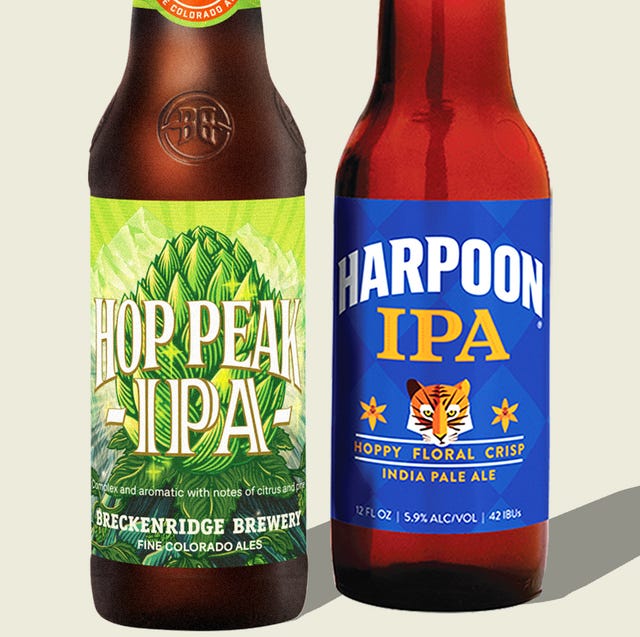
Harpoon IPA

Harpoon Brewery drizly.com

$9.99

The favorite of bartender Matt Nickley of Savannah, Georgia

"My go-to is Harpoon IPA. It's crisp and refreshing with great floral and citrus notes, but finishes with a piney bitterness that reminds you what it is. It started out as a summer seasonal, but now it's available year round and tastes just as good in the ski lodge as it does on the beach. At 5.9 percent ABV, it's incredibly drinkable, and that means more beer for your face. 

"Sure, it's not a quadrupel hopped, 10-plus percent ABV, mountain man maker (or killer), but that's not the point! It's your trusty companion and a welcome addition to any cooler. But if it's a well-groomed beard-off you're looking for, I'd be glad to source a couple of Heady Toppers from the Alchemist and go sip for sip."

Happy Hops IPA

Russian River Brewing Company drizly.com

$7.99

The favorite of brewery owner Natalie Cilurzo of Windsor, California

"Am I allowed to use one of my own beers? If so, I would go with Happy Hops IPA by Russian River. I love the big, hoppy aroma with tons of juicy citrus, stone fruit, and tropical notes, and the lingering dry and bitter finish. Happy Hops packs the punch of a juicy/hazy IPA in a clear beer, which I prefer. It is also 6.5 percent ABV, so I can drink a whole one. Many IPAs are too high in alcohol, thus adding heat and a booziness that takes away from the hop character. I like my beers dry and well-balanced."

Surf Wax IPA

Burial Beer Co. drizly.com

$14.39

The favorite of brewer Hagin Owens of Sevierville, Tennessee

"My favorite IPA right now would be literally any IPA by Burial Beer in Asheville, North Carolina. They are constantly on the forefront of the IPA train that is super dense right now, so that's saying something. Burial Beer has to be the best place near me to get an absolute killer IPA every single time you go. Their flagship IPA, Surf Wax, has won a ton of medals and is so unassuming but extremely complex, with the perfect balance of hop flavor that takes it to the extremes of the style but doesn't overdo it. Its delicious, tropical fruitiness mixed with pine and dank flavors meld together perfectly, and don't get muddled and 'muddy' like a lot of IPAs do nowadays. And their can art is always interestingly odd and eclectic, which definitely plays a factor in picking beer, by the way. 

"Also, I think it's really important when buying packaged beer that you always, always check the 'brewed on' date on the can or bottle, so you know your beer is super fresh to preserve all the juicy hop flavors you want and paid for. I personally don't like to drink IPAs more than a month old, because the fall off of hop flavor goes quickly past that."

Heady Topper Double IPA

The Alchemist Brewing drizly.com

$18.99

The favorite of bartender Ryan Crossman of Brooklyn, New York

"Since I'm a New England boy at heart, my first suggestion is the often sought out, but hard to acquire, Heady Topper, brewed by Alchemist in Waterbury, Vermont. This beer had/has a cult-like following and has been around since 2003. It is a hazy, New England-style double IPA that packs a punch at 8 percent ABV, which is great for a guy like me who usually only wants to drink one or two IPAs anyway. If you like crushing beers, keep that in mind or you'll end up walking sideways. 

"Heady Topper has a nice, hazy straw color with aromas of citrus, pine, and dare I say, what a hippie might call a bag o' dank nugs. The beer is fantastically balanced—sharp and bitter but not cloyingly so. The hop taste is evened out by fruity, honey floral notes. If you can find it, I highly recommend this beer that helped kick off the craft beer craze in New England."

Hippies and Cowboys IPA

Tennessee Brew Works totalwine.com

$8.99

The favorite of bartender Lucy Cleek of Maryville, Tennessee

"Lagunitas remains a favorite. The Bell's Two-Hearted is also something most every IPA drinker will like. Currently, I'm trying to push Tennessee Brew Works' Hippies and Cowboys. It’s very fruit forward, so not everyone’s favorite, but I think most people around here appreciate that it’s a Tennessee beer. If they want to stray away from Lagunitas, I’ve also been recommending TrimTab Brewing of Birmingham, Alabama."

60 Minute IPA

Dogfish Head Brewery drizly.com

$11.99

The favorite of bartender Carl Parker of Washington, D.C.

"I love lighter colored IPAs, so my favorite and go-to IPA is the Dogfish Head 60 Minute IPA. It’s super crisp with a slight bitterness that I love. It has a little umph to it, plus it’s pretty easy to find."

Field Drinker IPA*

Strong Rope Brewery strongropebrewery.com

$19.00

The favorite of beer buyer Troy Wennet of Brooklyn, New York

"I'm from the West Coast and still prefer a bitter, clean, nearly clear IPA versus the softer, fruit-flavor-forward, Northeast-style that's risen in popularity over the recent years. My experience in the beer industry has taught me that fresh beer is the best beer—this is especially true with IPAs. The less chance the beer has to face temperature change (which happens frequently when it is placed in the hands of a third party distributor transporting it for long distances across country/countries), the better it will taste. If it is being pumped from the bright tank into your glass, even better. So my advice: Find the brewery nearest you that brews on site and drink that IPA.

"For me, right now, I'm personally loving Gowanus, Brooklyn's Strong Rope Brewery's Field Drinker IPA; it's a 4.2 percent ABV, all New York-state hops and malts, palatably bitter, clean, refreshing, perfect-for-summer beer. They can it regularly for easy, delicious, remote drinking."

*While Field Drinker is currently out of commission, Strong Rope has other IPAs available in Brooklyn; currently on tap are Wolf Orbit and Wolf Captain.

Hopadillo IPA

Karbach Brewing Co. drizly.com

$9.50

The favorite of brewmaster Eric Warner of Galveston, Texas

"My number-one IPA recommendation is Karbach’s Hopadillo IPA, the number-one selling IPA in Texas for at least the last five years. It’s a classic IPA, with hops from three growing regions around the world. It contains some great malt notes but is by no means sweet. The finish is clean, dry, and bitter, just like a good IPA should have. I like an IPA to have a strong hop aroma and a dry, mineral-y finish. However, the answer to what you like about an IPA is quite complex. The thing is, there are now so many sub-styles of IPAs out there, such as hazy IPAs, black IPAs, and sour IPAs. But, the common denominator for IPAs is strong hop aroma and flavor. If that isn’t there, then it’s not really an IPA."

Woods & Waters IPA

Maine Beer Company drizly.com

$7.99

The favorite of beer marketer Anne Marisic of Freeport, Maine

"When I first got into craft, the beer that changed my understanding of what beer could/should taste like was Victory HopDevil. Pine and citrus from American hops, followed with a nice malt backbone, it won me over. 

"That love of American hops launched my passion for beer, so it's not surprising I ended up at Maine Beer Company, a brewery known for hop-forward brews. Most people know us for our West Coast-style IPA Lunch, but my personal favorite is Woods & Waters. We first brewed this beer in 2016 to commemorate the designation of Katahdin Woods and Waters National Monument in Maine's North Woods. The beer is brewed primarily with local malts from Blue Ox Malthouse, and features Magnum, Simcoe, Mosaic, Columbus, and Idaho 7 hops. It has amazing notes of pink grapefruit, melon, and subtle pine. Woods & Waters is clean, dry, and refreshing, and helps draw attention to a beautiful part of our state that many people aren't familiar with."

Hop Peak IPA

Breckenridge Brewery drizly.com

$10.16

The favorite of brewmaster Carl Heinz of Littleton, Colorado

"Hop Peak is a go-to for me because it's bursting with bright citrus and crisp pine aroma but isn’t overly sweet, which allows it to remain highly refreshing through any season. Additionally, Hop Peak IPA is one of the more labor-intensive beers that we craft. From breaking bails of whole-cone hops to dry hopping, everything must be conducted with meticulous attention to detail, and I think that effort makes the beer all the more enjoyable and satisfying to drink."

Subscribe to Esquire Magazine

hearstmags.com

This content is created and maintained by a third party, and imported onto this page to help users provide their email addresses. You may be able to find more information about this and similar content at piano.io

Advertisement - Continue Reading Below


July 31, 2020 at 06:01PM
https://ift.tt/3hYsh6D

10 Best IPA Beers - Top IPAs of 2020, According to Beer Experts - Esquire.com

https://ift.tt/2NyjRFM
Beer

An infant died after her mother drank beer and they shared a bed. Maryland’s highest court said it wasn’t a crime. - The Washington Post

sela.indah.link

By morning, Muriel Morrison’s daughter was listless, her lips blue. Morrison was charged and convicted by a jury in the co-sleeping death of her infant, who suffocated while she slept beside her mother.

Maryland’s highest court this week threw out Morrison’s 2013 conviction and 20-year sentence. The decision divided the Maryland Court of Appeals along gender lines, with the all-female majority ruling that there was not enough evidence to find that Morrison was “grossly negligent.” The judges were not prepared to criminalize co-sleeping in the same bed as an infant.

“Co-sleeping with a four-month old after consuming beer does not necessarily pose such an inherent risk of death or serious physical harm,” wrote Judge Michele D. Hotten, who was joined by Chief Judge Mary Ellen Barbera and Judges Shirley M. Watts and Brynja M. Booth.

Although the government introduced evidence that the safest way for a baby to sleep is alone in a crib or bassinet, affirming Morrison’s conviction “would potentially have a disparate effect on women in general, and indeed women of color and women of limited socioeconomic means,” Watts wrote in a concurring opinion.

“Certainly, anyone who co-slept with a baby under circumstances similar to those in this case would be at risk for conviction on insufficient evidence in any jurisdiction in the State,” she wrote.

Morrison’s case in Baltimore, which began after a virtual “moms’ night out” in September 2013, came long before the coronavirus pandemic, stay-at-home orders and subsequent explosion of online happy hours. But the legal battle over the actions of a newborn’s mother socializing online resonates and revives the fraught debate over co-sleeping.

There are about 3,500 sleep-related deaths of babies in the United States each year, including from sudden infant death syndrome (SIDS), accidental suffocation and deaths from unknown causes, according to the Centers for Disease Control and Prevention.

The American Academy of Pediatrics encourages parents to share a room with their babies, but not the same bed. A decade ago, Baltimore health officials began promoting safe sleeping practices with new parents to reduce infant deaths, with the message that infants should sleep alone.

But the practice of co-sleeping is popular, with 61.4 percent of mothers reporting having shared a bed with their babies in a CDC survey.

Linda C. Fentiman, who has taught criminal and health law at Pace University’s law school, said it is not common for parents to be prosecuted in co-sleeping deaths. Fentiman said her research shows that when jurors, judges and prosecutors assess risk and try to answer the question of what a reasonable person should have done, they bring an unconscious bias and tend to hold mothers to a different standard.

“People expect women to be more careful, and the ‘reasonable mother’ ends up being pretty close to Mother Teresa,” she said.

The court majority, Fentiman said, was concerned about “the unfairness of sending [Morrison] to prison given that it wasn’t a clear risk.”

The dissenting judges in the case agreed that co-sleeping with an infant is not inherently dangerous. But the combination of drinking to the point of “serious impairment,” they said, “creates a substantial risk that the parent will suffocate the infant.”

It is not the court’s role, the dissent said, to second-guess the jury and its conclusion that Morrison drank to the point of “serious impairment” before getting into bed with her infant and 4-year-old daughter.

“We are constrained to conclude that a rational juror could have found that Ms. Morrison went to bed seriously impaired by alcohol and that she therefore was grossly negligent by not sleeping somewhere other than next to [her infant] that night,” wrote Judge Jonathan Biran, who was joined by Judges Robert N. McDonald and Joseph M. Getty.

At her three-day trial in 2016, Morrison testified that she drank two 12-ounce beers and about half of a 40-ounce bottle of malt liquor during the virtual happy hour to celebrate the start of the 2013-2014 school year with her friends in Virginia.

Her older daughter, who was 4 at the time and 7 when she testified at her mother’s trial, said her mother had rolled on top of her baby sister. She tried unsuccessfully to wake Morrison, who was in a “deep, deep sleep,” her daughter testified.

Prosecutors argued that Morrison engaged in a practice that had been proven to be dangerous and had drank enough alcohol to effectively “pass out.”

But Morrison told the court that co-sleeping was a tradition in her family. She shared a bed with her mother as a child, her mother had done the same with her grandmother, and Morrison had done so with each of her five older children, as did many of the other mothers she knew.

The jury convicted Morrison of involuntary manslaughter. She received a 20-year sentence, which was suspended by the trial court, and was put on probation. Her conviction for child neglect was upheld.

The office of Attorney General Brian E. Frosh (D) declined to comment Thursday on the ruling.

Morrison’s attorney, Haley Licha, an assistant public defender, said the court majority was concerned about opening the door to prosecuting parents for accidental injuries to their children.

“When an accident takes the life of a child in their parents’ care, do we need to punish that parent, or is there a better way to handle it?” she said.

Morrison, now 48, was devastated, Licha said, and “is going to be blaming herself for this forever, but that doesn’t make it a crime.”


July 31, 2020 at 02:17AM
https://ift.tt/30d3l50

An infant died after her mother drank beer and they shared a bed. Maryland’s highest court said it wasn’t a crime. - The Washington Post

https://ift.tt/2NyjRFM
Beer

With Restaurants In Crisis, Wine Pros Seek a Way Forward - The Wall Street Journal

sela.indah.link

SOME MAY LAMENT the absence of their hairdresser or weekly sessions with a yoga instructor during the pandemic shutdown; I’ve been missing the sommeliers. It’s been months since I consulted a wine professional in a restaurant and I’m feeling the loss. But what of the losses to the sommeliers themselves, especially those whose restaurants are temporarily or forever closed?

The news has been grim as restaurants have either stayed shut or reduced customer capacity to numbers that are cripplingly small. And while some employees...


July 31, 2020 at 09:00PM
https://ift.tt/3gkaPsH

With Restaurants In Crisis, Wine Pros Seek a Way Forward - The Wall Street Journal

https://ift.tt/31lUVcw
Wine

The World's Most Expensive Wines - Wine-Searcher

sela.indah.link

Given the way the past six months has panned out, it's either a wonder that anyone can afford to buy wine at all – or it's a miracle that we aren't all blundering through the year with bottle and glass permanently attached.

To say it has been a tough year is a risible understatement. As the year began, most wine people had plenty to worry about – tariff threats loomed like the sword of Damocles, the global economy was struggling to grow, wine sales were down in the world's largest market, oversupply was being furiously denied by Californian producers, and climate change worries were giving growers sleepless nights.

It couldn't get much worse, could it? Well, we all know the answer to that – Covid-19 has stomped through the world like an ogre in a kindergarten, taking swipes at human mortality, medical capacity and the world's already fragile economy. On one hand, it's a wonder anyone can be bothered about wine at all, given the more immediate challenges; on the other, it would drive a saint to the wine flask.

The past 12 months have seen some pretty intense pressure on prices for wines generally. Even "collectable" regions like Napa, Burgundy and Bordeaux have seen price rises slow down. The average price for Bordeaux blends from Napa, for example, rose by 28.75 percent from 2016 to 2018, across all wines on our database. For the period between 2018 to now, the average price rose by just 15 percent. Napa Cabernet average prices rose by 18.57 percent over the 2016-2018 period and by 13.4 percent since.

Bordeaux shows similar slowing growth, as does Champagne, where the average price of a bottle fell by 1.54 percent since 2018, after a rise of 4.8 percent across the previous two years.

Of course, these figures take into account all wines from a region but, as we have seen across this series of articles, growth hasn't been easy at the top end either. However, when it comes to the crème de la crème there appears to be still plenty of leeway, although the $20,000 a bottle average price mark seems curiously hard to break.

What's also hard is talking about the world's most expensive wines without the word "Burgundy" cropping up repeatedly. This year, 33 of the top 50 most expensive wines are from Burgundy; Mosel is the silver medallist with five.

For a region that produces effectively two types of wine, Burgundy's influence far exceeds its output, but that's part of the attraction: its top wines are so rare and so terroir-specific that they attract collectors and, consequently, the list of the world's most expensive becomes something of a victory parade for Burgundy, as prices rocket ever higher.

Except for that $20,000-a-bottle average price ceiling, of course. This year, our top wine has actually fallen in price, illustrating how tough conditions have been. So let's take a look at the top 10.

The Most Expensive Wines on Wine-Searcher:

It's interesting to compare this list with last year's. While it's predominantly the same, there are three new faces in the top 10, while the relative performance of the wines' average prices has seen some interesting contrasts, too.

First the new arrivals, and they are the Jayer Cros Parantoux, Graham's Ne Oublie and the Domaine d'Auvenay Bâtard-Montrachet. The first two are there based on rarity; since Henri Jayer died back in 2006, no more vintages of his wines will appear again, while the Port was a one-off limited to 656 bottles.

It would hardly be a most expensive list without an appearance by Domaine Leroy.
© iDealwine | It would hardly be a most expensive list without an appearance by Domaine Leroy.

The d'Auvenay, however, is there purely on its well-flexed price muscles, with the average price rising by 16 percent in the past 12 months, allowing it to displace its Chevalier-Montrachet stablemate (which only saw a "mere" 8.75 percent rise in its average price). The other two to fall from the list this year, the Screaming Eagle Sauvignon Blanc and the Domaine Leroy Richebourg Grand Cru, also saw their average prices rise, but not as quickly as the others. 

Surprisingly, the wine that saw the biggest fall in its average price has been the one at the very top of the tree. DRC's Romanée-Conti Grand Cru saw a 5 percent fall since last year, although it is still in the sort of price territory one more normally associates with a new compact car. It has come back a little since April this year, when it went below $20,000 for the first time since January 2019.

The runner-up, Domaine Leroy's Musigny Grand Cru, peaked in April 2019, when it hit an average price of $22,484, a staggering sum. While it has rallied from an August 2019 low of $14,514 a bottle, it has managed an overall rise of 9.85 percent in the past 12 months. 

These two wines have been fighting it out for the top spot for some time now, and it's fascinating to watch the relative long-term performances. Notwithstanding the last year's hiccup, DRC's performance has been stately, a leisurely upward swing over the past five years, unruffled by major upsets. By contrast, the Leroy has been up and down like a hyperactive trampolinist, showing volatile swings across the same period. Despite that, however, it's a winner in one sense: in the past five years, its average price has increased by a massive 286 percent, compared to DRC's relatively tame rise of 46 percent.

Elsewhere, only one other wine fell back in price and, curiously, it was the other DRC – the Montrachet's average price fell by almost 3 percent. The Roumier Musigny remained static, while all the others rose; the lowest was the Egon Müller Trockenbeerenauslese with 3.16 percent, while the d'Auvenay Bâtard-Montrachet jumped 16 percent and the Leroy Chambertin by 15.5 percent.

Outside the top 10, it's educational to see which regions are elbowing their way amongst the princes of Burgundy and Mosel. The most obvious candidate is Bordeaux, but there are just three wines from there in the top 50, with the only Left Bank representative the maverick Liber Pater, which remains below the $5000 mark, despite the release price of its latest vintage sitting at $34,000. Petrus and Le Pin are Bordeaux's other runners.

Napa has two wines in the top 50, the Screaming Eagle Sauvignon and its Cabernet stablemate, while Port and Madeira have two apiece. Champagne, the Rheingau and Chave's Cuvée Cathelin from the Rhône round out the 12 non-Burgundy/Mosel positions. It seems even a perfect storm of catastrophe cannot remove those regions – and Burgundy particularly – from their thrones.

And this past year certainly confirms that.


July 31, 2020 at 07:02AM
https://ift.tt/3133tU6

The World's Most Expensive Wines - Wine-Searcher

https://ift.tt/31lUVcw
Wine
Covid-19 Impact on Cough Syrup Market Growth 2020, Industry Size Estimation, Global Share, SWOT Analysis, Application, Top Companies, Merger, Regional Revenue | - Medgadget

sela.indah.link
Covid-19 Impact on Cough Syrup Market Growth 2020, Industry Size Estimation, Global Share, SWOT Analysis, Application, Top Companies, Merger, Regional Revenue | Medgadget Covid-19 Impact on Cough Syrup Market Growth 2020, Industry Size Estimation, Global Share, SWOT Analysis, Application, Top Companies, Merger, Regional Revenue |


July 31, 2020 at 02:37PM
https://ift.tt/39JWVgZ

Covid-19 Impact on Cough Syrup Market Growth 2020, Industry Size Estimation, Global Share, SWOT Analysis, Application, Top Companies, Merger, Regional Revenue | - Medgadget

https://ift.tt/2Vp15Vw
syrup

A Next-Generation Infant Formula—The Closest To Mother’s Milk Yet—Made With Biology - Forbes

sela.indah.link

When breastfeeding isn’t an option, a new bioengineering-enabled formula may be the next best thing

The benefits of breastfeeding are well-known. It provides essential nutrition, boosts a baby’s immune system, and supports physical and emotional development in the early years. Breastfeeding even has wider environmental and economic benefits for our communities. Yet the Centers for Disease Control report that only 25 percent of U.S. infants receive breast milk exclusively during their first six months. For many parents and caregivers, infant formula is an essential part of keeping their babies healthy and fed.

In the $47 billion infant formula market, producers like Nestlé (GERBER), Danone (SIMILAC), and Mead Johnson (ENFAMIL) are eager to produce formula that mimics human breast milk as closely as possible. This is a tall order. Besides lactose and fat, mother’s milk contains hundreds of components which vary from mother to mother—and even from feeding to feeding.

One such component is lactoferrin, the second most abundant protein in human milk. As an antimicrobial and antiviral agent, lactoferrin is especially important in establishing an infant’s immune system. It also helps babies absorb the iron in breast milk.

Recommended For You

But getting lactoferrin into infant formula isn’t easy. Many formulas depend on bovine (cow) lactoferrin as a substitute. This is less than ideal, since bovine lactoferrin is extracted from cow milk through an expensive purification process that also removes other nutrients.

Conagen, a synthetic biology company in Boston’s biotech corridor, recently announced that it has developed a process for making lactoferrin that is very close to the lactoferrin in breast milk. Using the tools of biological engineering, Conagen researchers have designed a fermentation process—the same process used to make bread, cheese, and wine—to manufacture a better version of lactoferrin. As a result, Conagen’s lactoferrin mirrors the benefits of human lactoferrin more closely than any other alternative. This bioengineered ingredient could bring infant formula closer to mother’s milk than ever before.

Infant nutrition is just one potential application of Conagen’s lactoferrin. With iron deficiency affecting almost 30% of the world’s population, it could also serve as a dietary supplement for iron absorption in children and adults. And because lactoferrin promotes bone marrow growth, Conagen’s new molecule could facilitate progress in yet another area of interest in the pharmaceutical industry.

From a manufacturing perspective, Conagen’s microbial platform could also change the landscape of the infant formula market. The company’s technology is both cost-effective and sustainable, with potential for scaling up while simplifying downstream purification processing.

“The main key drivers of our platform are speed, cost, and quality,” says Richik Nilay Mukherjee, PhD, Scientific Innovation Officer at Conagen. “The way our work is inspired from nature motivates our vision of how we do science in a fast, sustainable, and cost-competitive way.” 

Conagen’s breakthrough comes at a time when there is growing industry interest in producing not just better lactoferrin, but many other components of human breast milk. These include the 200 or so human milk oligosaccharides (HMOs) that act as prebiotics in feeding the “good” bacteria in infants’ guts. In newborn babies, HMOs have been shown to lower the risk of diarrhea, respiratory disease, and viral or bacterial infections.

From zero-calorie sweeteners to mold-free bread, synthetic biology has been pushing the nutrition industry toward a more cost-effective, healthy, and sustainable future. Conagen’s lactoferrin, poised to narrow the gap between mother’s milk and infant formula, represents yet another nutritional advance powered by synthetic biology.

Casey Lippmeier, Vice President of Innovation at Conagen, says that mother’s milk infant formula is one of the first “impossible foods” we might engineer, but he hopes that it won’t be the last. As Conagen’s lactoferrin awaits FDA approval for its use in infant formula, the company will continue to shape and lead markets through its commitment to sustainability, scale, and a healthier future for young and old everywhere. 

Follow me on Twitter at @johncumbers and @synbiobeta. Subscribe to my weekly newsletters in synthetic biology. Thank you to Aishani Aatresh for additional research and reporting in this article. I’m the founder of SynBioBeta, and some of the companies that I write about are sponsors of the SynBioBeta conference and weekly digest. Here’s the full list of SynBioBeta sponsors


July 31, 2020 at 08:00PM
https://ift.tt/3feUJiH

A Next-Generation Infant Formula—The Closest To Mother’s Milk Yet—Made With Biology - Forbes

https://ift.tt/2XiyktG
Milk

Coca-Cola is launching coffee-flavored soda in US - Business Insider - Business Insider

sela.indah.link
  • Coke is debuting a coffee-cola hybrid called Coca-Cola with Coffee in the US, with the drink hitting shelves in January 2021. 
  • The drink has roughly twice the caffeine as classic Coke and half the calories. 
  • As people's daily routines are disrupted by the pandemic, Coca-Cola executives see a chance for people to turn to Coca-Cola with Coffee for their daily caffeine fix. 
  • Visit Business Insider's homepage for more stories.

Coca-Cola is bringing Coke with Coffee to the US just as Americans' daily coffee routines are scrambled by the coronavirus pandemic. 

The beverage — which is already available internationally — will hit shelves in the US in January 2021. Coca-Cola with Coffee will be available to the company's subscription service, called the Coca-Cola Insiders Club, this week. 

"We think of this as a hybrid category," Jaideep Kibe, the vice president for the Coca-Cola trademark in North America, told Business Insider. "We've got an opportunity to create almost a new sub-category called refreshment coffee." 

A 12 ounce can of Coca-Cola with Coffee has 69 mg of caffeine, versus classic Coke's 34 mg, and 70 calories, half of Coke's 140 calories. The classic Coca-Cola with Coffee Dark Blend's flavor is similar to that of the classic cola, but the aftertaste is closer to sweet coffee. The company will also sell Coffee Vanilla and Coffee Caramel flavors. 

Coca-Cola with Coffee launched in 25 countries last year, including Australia, Spain, and Thailand. While the beverage's entrance into the American market has been a long time coming, the pandemic has helped highlight when and why people might find themselves reaching for a Coca-Cola with Coffee. 

"As people have been in lockdown or ... working from home, there's a real opportunity to get that boost, that little pick-me-up, whether it's the slump in the afternoon or mid morning," Kibe said. With the loss of office rituals such as gathering around the coffee machine, he said, people can instead reach for a can of Coca-Cola with Coffee. 

Coca-Cola's attempt to meld the coffee and the cola market can be seen in some ways as the beverage giant attempting to regain lost ground. RBC analyst Nik Modi has theorized that Starbucks took a slice of business away from Coca-Cola and PepsiCo, as people began to swap soda for coffee when seeking out a caffeine boost. 

"Twenty years ago, people used to wake up with a Diet Coke or a Diet Pepsi," Modi said at Beverage Digest's 2016 Future Smarts conference. "At around 2 o'clock, they'd have another and take a break. Walk in front of a Starbucks at 8 a.m. and 2 p.m. and tell me how long the lines are."

Kibe refrained from naming any direct competitors, instead saying he expected Coca-Cola with Coffee to grow sales by attracting a range of consumers. But, the pandemic has already forced people to change up their daily Starbucks' routines. Starbucks said this week that its morning business has slumped as people are no longer commuting, with a rush of customers now coming at around 9:30 a.m. and 2:30 p.m. 

Coca-Cola has already found success in expanding trademark Coca-Cola, with new flavors and the launch of Coca-Cola Energy in January. Coca-Cola has doubled down on its successful brands during the pandemic, while killing off less successful lines, with CEO James Quincey saying that the company's "goal was to ruthlessly prioritize" core brands to strengthen the supply chain. 


July 31, 2020 at 07:01PM
https://ift.tt/33cGg4v

Coca-Cola is launching coffee-flavored soda in US - Business Insider - Business Insider

https://ift.tt/2BNgZlB
Soda

Featured Post

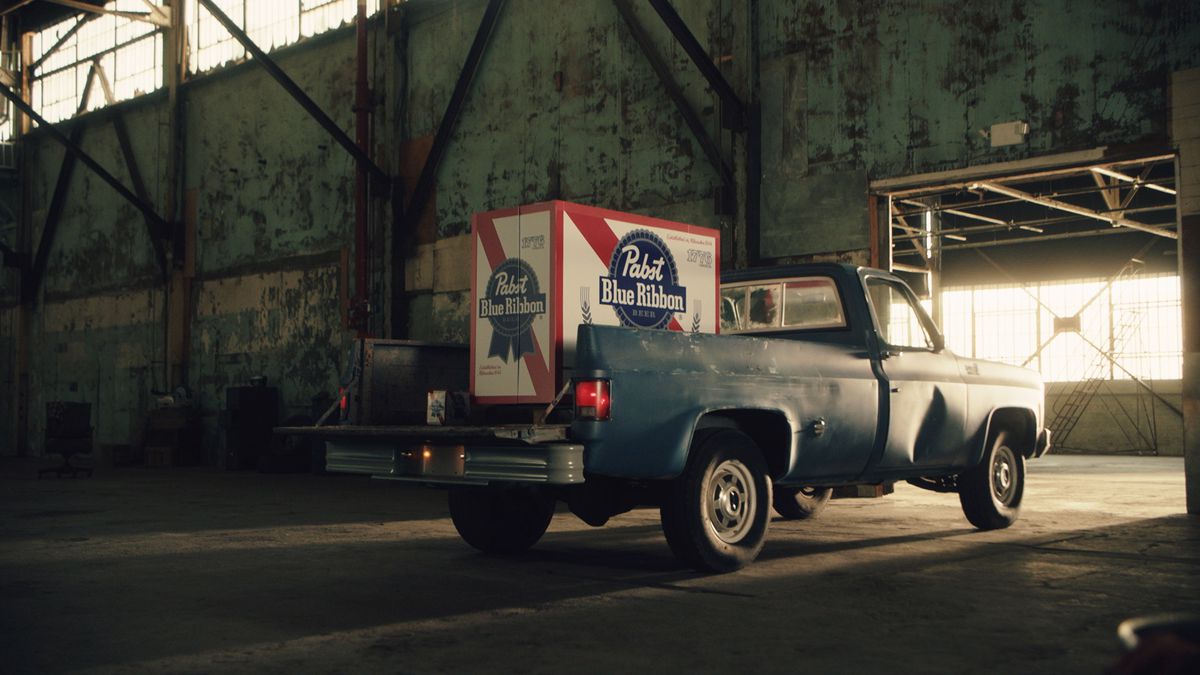
PBR Created a 1776-Can Pack of Beer | Food & Wine - Food & Wine

sela.indah.link PBR Created a 1,776-Can Pack of Beer | Food & Wine Skip to content ...

Popular Posts