December 01, 2020 at 11:22PM
https://ift.tt/36q7cyM
This new beer is all about preserving American red wolves! - KGO-TV
https://ift.tt/2NyjRFM
Beer

In the tongue-in-cheek Facebook post on Tuesday, police officials said they were looking for the man so they could “educate him on the benefits of quality over quantity” when it comes to his beer choices, as well as “breakfast stouts versus lagers.”
MUSKEGON, MI -- One Michigan brewery is putting its support for Michigan Gov. Gretchen Whitmer right on their cans.
Muskegon’s Rake Beer Project this week is releasing “Big Gretch: The Return,” a petite sour saison, which is a follow up to a hard seltzer it released in May in support of the governor’s stay at home order.
Encouraging Michigan residents to keep following health guidelines during the ongoing COVID-19 pandemic, owner and brewmaster Josh Rake said he wanted to do his part to support efforts to protect Michiganders.
Like other restaurants and breweries, he is only allowed to offer carryout and outdoor service under the new health order to stop dine-in service. Some restaurants have decided to defy the order.
“(We’re supporting) the fact that she is making the tough decision to do this when there is so much pressure on her to not take any action,” Rake said. “Until this pandemic is brought under control, and we can put this thing behind us, being open is not the answer, for me at least. Even if we’re open at 50 percent, it’s not a long-term, viable thing.”
He said he has heard from a lot of Muskegon business owners who say: “Let’s do the right thing, let’s shut this down and take care of it, and then we can get back to normal sooner.”
Rake said he talked to Whitmer after the hard seltzer was released in late May.
“(She) called me on the phone personally while cracking her first one,” said Rake, a former political science major who worked as a page on the Michigan Senate floor at the same time Whitmer was State Democratic Leader.
Rake said the seltzer was a big hit with customers.
“We were really amazed by the response to the first drop of Big Gretch,” he said. “(It) kind of blew up and took on a life of its own. We sold out of the entire batch in just minutes.”
He still receives multiple messages a week asking for the beer, “or even just an empty can or label to keep as a memento of these crazy times,” he added.
RELATED: Muskegon brewery launches limited-run drink named for Gov. Gretchen Whitmer

The Rake Beer Project in Muskegon, Michigan is owned by Josh Rake. It opened on Sept. 12, 2019.Rake Beer Project
For “Big Gretch: The Return,” Rake said the new beer better reflects his farmhouse brewing style. It is brewed with oats and wheat, fermented with a “unique blend of saison yeasts, and conditioned with a light dry hop and fresh mango. It is light, crisp, fruity, and absolutely crushable,” he said.
It will retail for $18 a four-pack (16 oz. cans). The beer has an ABV of 4.4%. He brewed 15 barrels, three times more than the seltzer.
It is available for online pre-orders beginning at 6 p.m. on Dec. 1. Typically online sales begin at 5 p.m., but Rake said he wanted to give customers an extra hour if they’re arriving late from work.
Pickups are available from noon to 7 p.m. Dec. 4 and 5 at the Muskegon taproom, 794 Pine St.
If he doesn’t sell out his pre-orders, he will have beer available at the taproom for sale. He may even send some beer to a few retailers.
The beer uses the same meme-inspired label of Whitmer wearing Buffs and a gold chain of Michigan’s Mitten and Muskegon’s 231 area code around her neck. Rake said he was inspired to make the beer when he heard Detroit rapper Gmac Cash turn the ”Big Gretch” phrase into a song.
For more information, and to order the beer, go to rakebeerproject.com.
IF YOU GO
Rake Beer Project
794 Pine St., Muskegon, MI 49442

'Tis the season to lift a glass of Michigan beer in cheers.
More Michigan Beer Coverage
What does hope look like to you? This Michigan brewery wants to know
Spread holiday cheer with these Michigan beers
12 small breweries in Michigan making tasty beer
17 bold Michigan beers to drink now
Put these 16 sweet new Michigan breweries on your must-try list
Doughnut beer? Michigan brewery, gas station chain creates ‘Donut Stop Believing’
Black-owned brewery sees international interest in debut beer release

We hiked back to the campsite, wet but warm on a balmy summer evening in the high country of Northern California. Fishing with fly rods, my dad, my two brothers and I had caught a dozen brook and rainbow trout, and in camp, we decided to try a dinner diversion from the usual coal-grilled trout. We filleted and deboned the fish, then whipped up a batter of pancake mix and beer. We dipped and fried the fish, and we still remember that meal, in the mountains of Siskiyou County, as one of the best we’ve eaten while camping.
Food nearly always tastes good on backpacking trips — and others would say it always tastes better when cooked with beer. That trip was in the early 1990s, and I assume the beer, in those days before the craft craze, was the sort of mass-brewed lager that beer today’s aficionados tend to scorn. Yet, it seemed to make a fantastic beer batter.
Today, beer-battered fish is the most basic of pub grub, as seen in the fish and chips at Marin Brewing and Moylan’s brewing companies. Onion rings and other fried foods also often receive the beer-batter treatment. All the while, cooking with beer in more complicated ways has become a hallmark of advanced cuisine. Stewed beans, steamed mussels and clams, braised meat and beer-baked bread are just a few items made better with a slosh, or a few bottles, of beer. Cider, too, makes just about anything on the stove better.
But cooking with beer and cider, as with wine, requires a little understanding of the beverages, how they taste, and how different styles’ properties can affect food they’re cooked with. Starting with cider, it may be the simplest of beverages to cook with. Not to disparage cider, but for culinary considerations, they’re basically all the same, with some variation in sugar content. Whereas wines range from reddish-black to almost water-clear — differences that correlate to flavor and which will strongly influence a dish — and whereas beers run the same spectrum, ciders do not, and I’ve never fouled up a dish by adding a slug of fermented apple juice.
Now to beer. Virtually all are sweet, and that residual sugar plus a spike of alcohol adds wonderful flavor to food. However, there is one firm rule, in my opinion: Reserve the IPA for drinking. Bitterness — the signature quality of an IPA — can spoil some foods, like fish, especially after cooking a beer down into a concentrated sauce.
For sautéing or deglazing a pan, use a pilsner, kölsch, saison or a wheat beer instead. (For an experiment, you could also use a hazy IPA, which is brewed in a unique way that minimizes bitterness.)
You’ve probably cooked with wine, which tends to be rather acidic and adds fantastic flavor to just about anything it touches. With that in mind, think of sour beers like wine. They are complex and acidic and can be used for marinating, sautéing, steaming or even poaching.
The parallels to cooking with wine continue with very dark beers; pair them to strong and flavor-forward foods. Adding a porter to a turkey or beef stew will enrich the broth without overpowering the dish. At Iron Springs Pub and Brewery in Fairfax, the kitchen offers pork braised in stout, for example. Many people describe stouts as bitter — but they are not bitter in the same way that most IPAs are. The bitterness of a stout comes from roasted grains, whereas an IPA’s bitterness comes from hops’ alpha acids. Thus, the bitterness of a stout is different, and more food-friendly, than the bitterness in an IPA.
You might also use a dark, heavy beer to make bread, pancakes or scones. Replacing some of the recipe’s water, by volume, with a stout or porter will add color and malty flavor to what you bake. If you use a milder beer, like a pilsner or a session IPA, try replacing all the water with beer. Your bread will not only come out of the oven with more flavor but may also be fluffier, thanks to the bubbly nature of beer.
In general, when cooking with beer, remember that a little can go a long way, and a whole bottle isn’t necessarily a good idea. Just a small pour of beer can take a simple dish to the next level.
Also keep in mind that there is no need to use expensive, or particularly good, beer for cooking. The nuances that make some beers great versus good will evaporate when added to a hot pan or crock. So, if you want to use a whole bottle in a dish, buy something on the lower end of the pricing scale.
With all that said, take your beer into the kitchen without overthinking it. As a general rule, whatever beer is in your hand will do good things for whatever dish you’re cooking.
Alastair Bland’s Through the Hopvine runs every week in Zest. Contact him at allybland79@gmail.com.

PHNOM PENH, Cambodia — Seven people died and more than 130 others were hospitalized in Cambodia after drinking rice wine that health authorities believe was adulterated with a toxic substance.
The Health Ministry said the incident happened Saturday in a remote rural area of central Cambodia's Kampong Chhnang province, where villagers drank the wine at a funeral ceremony.
It said a toxic substance in the wine was the cause of the deaths. Most of the people who were sickened are recovering, with some already released from the hospital, it said in a statement Monday.
Dangerous cheap but powerful alcoholic drinks are a perennial problem in Cambodia's poor rural areas, and several accidental poisonings are reported each year. Often the alcohol is not distilled properly and contains methanol, which can kill even in small amounts.
Rice wine is typically homemade and is popular at social gatherings, although in at least one case the tainted wine was a bottled brand made in the capital, Phnom Penh, that had been sold in provincial markets for several years without incident.
The Health Ministry said it sent three experts to the village on the day of the incident to investigate the situation and make sure sales and consumption of the wine were immediately stopped.
In one of the worst such incidents, 14 villagers died and more than 200 others were sickened in the northeastern province of Kratie in May 2018 after drinking rice wine containing methanol.

Treasury Wine Estates Ltd said Monday it would redirect some wine intended for China and cut costs after Beijing imposed anti-dumping tariffs on Australian wine, dealing a significant blow to the world's largest listed winemaker.
The company said it would relocate its Penfolds Bin and Icon luxury range of wines from China to other markets such as Australia, the United States and Europe. It added that future vintage intakes from 2021 would also be reduced.
Over the weekend, China imposed temporary anti-dumping tariffs of 107.1% to 212.1% on wine imported from Australia, with Treasury Wine facing a rate of 169.3%, the highest of any of the named wine companies.
Nearly a third of Treasury Wine's earnings in fiscal 2020 came from China, where it enjoys strong demand for its higher-margin luxury wine. It said demand in China would be extremely limited because of the tariffs.
"We are extremely disappointed to find our business, our partners' businesses and the Australian wine industry in this position," Tim Ford, chief executive officer, said.
China began an anti-dumping probe in August of Australian wine imports as relations between Beijing and Canberra deteriorated. China accounts for near 40% of Australian wine exports.
"There is no doubt this (tariffs) will have a significant impact on many across the industry, costing jobs and hurting regional communities and economies, which are the lifeblood of the wine sector," Ford added.
The tariffs are yet another blow to Treasury Wine this year, as global curbs on travel and social gatherings have hit sales hard, especially at its non-retail channels that include bars and restaurants.
Believe it or not, finding Foster’s beer in Australia – what international drinkers think of as the country’s beer of choice – isn’t easy. In its proverbial homeland, the Southern Cross-spangled cans elude shop shelves and, in 2015, just 10 venues across the entire country poured it on tap. But the brand that promoted Australia’s laidback drinking culture to the world has decided to relaunch locally, upping production in Melbourne by 300% in the coming months.
The brewer Carlton and United Breweries, now owned by Japanese behemoth Asahi, will target hip-pocket nerves, going after low-cost competitors. Thirty cans of Foster’s will retail at $53, compared to Lion’s XXXX Gold at $42.95 and CUB’s own Victoria Bitter at $59.99.
Today, the 132-year-old pale lager, which Asahi acquired from Anheuser-Busch InBev earlier this year, is distributed across Europe, the US and the UK, where it’s the nation’s second most-popular brew. Despite being brewed in Manchester, UK ads still feature Australian accents, sand and sun, with slogans like “beaut coldies” and “here’s to a bonza weekend”.
The international history of Foster’s dates back to 1888, when two Irish-American brothers began brewing in Melbourne. Predated by Cascade in 1824, Coopers in 1862 and Carlton in 1864, it wasn’t Australia’s first. But its debut UK campaign in 1971 synonymised Foster’s with local brewing when Barry Humphries defined it as “Australian for beer” on UK TV screens.
In the 1980s the Crocodile Dundee actor Paul Hogan, who was also spearheading campaigns for Australian tourism at the time, became the international sweetheart for “the liquid lifesaver”, winning British affections as the cheeky, sun-kissed Aussie stereotype.
In 1995 The Simpsons cemented Foster’s reputation as Australia’s favourite beer in “Bart vs Australia”. The can makes multiple cameos, first when Homer orders “one of those famous giant beers I’ve heard so much about”, again when prime minister “Andy” is seen floating on a tyre in a dam, Foster’s in hand, and finally, brandished by a rowdy court jury.
While the relaunch won’t be campaign-driven, CUB’s head of classic brands, Hayden Turner, says it’s a brand Australians know and trust, and that he’s confident its popularity can grow again.
“The Covid-19 pandemic has led Aussies to embrace nostalgia and yearn for simpler times,” says Turner.
But with mainstream beers on the decline, it’s a gamble. Australia’s craft beer industry is worth over $800m and grew 6.2% from 2015-2020, according to Ibis World, while Australia’s beer manufacturing industry as a whole declined 1.8% in the same time period. Ibis World attributes this drop to consumers increasingly swapping “traditional beers, such as Victoria Bitter, to higher priced premium and craft beers”.
This won’t be the first time CUB has successfully plugged nostalgia. In 2018 it forayed into fashion with Victoria Bitter and Melbourne Bitter merchandise lines including green cord caps and T-shirts sporting old-school logos. In July this year it also brought back Reschs “Silver Bullet” cans, after they were replaced with bottles in 2005, thanks to a long-running campaign by the Reschs Appreciation Society.
Jack Stutfield, art director at Mr Simple, the Melbourne label that produced the Melbourne Bitter line, says despite the fact that many of their consumers won’t have drunk from cans with the 1970s logos, the line has been incredibly popular.
“It went gangbusters – it sold out in a day,” he says, citing a growing trend among young people towards vintage Australiana. “Especially not being able to travel, people are really supporting more Australian stuff.”
Australian drinkers are fiercely territorial over their major-brand beers. Whether they will be like Homer Simpson and order tins of a beer that’s foreign to many Australians remains to be seen.
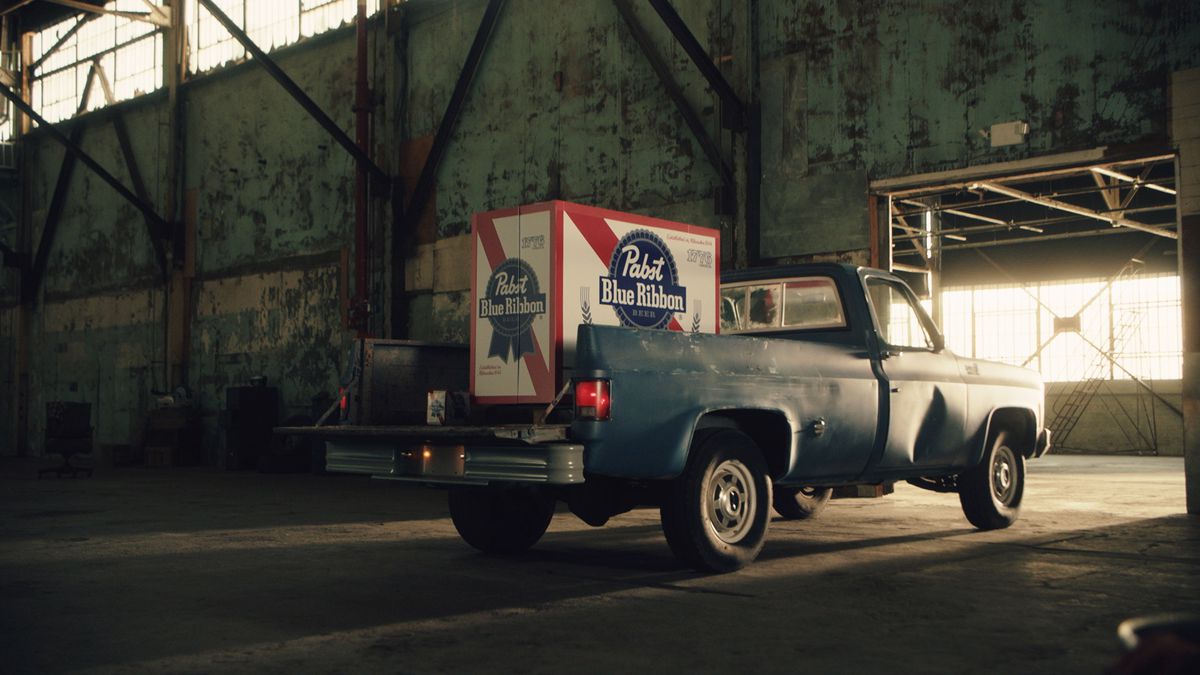
sela.indah.link PBR Created a 1,776-Can Pack of Beer | Food & Wine Skip to content ...