Rechercher dans ce blog

Saturday, October 31, 2020

Jennings Street Public House: creativity is key at this new Newburgh cocktail bar - Courier & Press

sela.indah.link
CLOSE

Autoplay

Show Thumbnails

Show Captions

NEWBURGH, Ind. – Right now, at the Jennings Street Public House, General Manager Nate Cavender has a big jar of pumpkin chunks macerating in Bourbon with ginger, orange peels, maple syrup, allspice, cloves, cinnamon sticks and nutmeg. This mixture, and many other homemade syrups and flavorings, will be used to craft specialty house cocktails.

“I’ll come in and there might be a crockpot of pumpkin or whatever under the bar,” said owner Nick Burch. “I’m like, ‘What are we doing here?’ and Nate says, ‘Don’t worry about it; it’s not done yet.’ The whole idea is playing with combinations of flavors and being creative.”

More food news

More: Stay Hungry: new Henderson BBQ, Pints for Polio at new pub and more in food news

More: The Landing: creative pub food with a view in Newburgh

More: Henderson Juice Co. offers far more than juice and smoothies

Burch is a beer brewer who has worked at Carson’s Brewery and Damsel Brew Pub. He teamed up with Matt Easterling, a beer and beverage salesman, to open the Jennings Street Public House.

The two had talked about owning a bar together and started working on it a year ago, settling into the Jennings Station space formerly occupied by The Tin Fish.

They finished the basement bar, and then COVID hit. When the art gallery in the upstairs area moved out, they took advantage of the downtime and remodeled that space into a bar as well and finally opened in September.

The Jennings Street Public House is a cocktail bar, with a focus on spirits and craft cocktails using fresh and house-made ingredients. Wine and eight taps of rotating craft and domestic beer are certainly available, but creative mixology is the name of the game here.

“I want to do the drinks right,” Cavender said. “We use fresh juice, make the syrups and put the extra effort into it. Some places make cocktails that cover up the flavor of the liquor, and we don’t. We want you to taste it; it’s part of the cocktail.”

Cavender and bartender Terra Meyer shop for fresh fruit for juices and flavorings.

“We shop at the Oriental groceries a lot,” he said. “Today I got Thai basil; I always get my citrus there, and if I see something I can’t live without, which happens a lot, I’ll get it. Terra’s doing something with fresh cranberries this week, or sometimes she’ll bring something from her garden.”

Some other interesting housemade cocktail ingredients are:

Habanero Honey and Pepper vodka – “One week I made a spicy honey for a spicy margarita, and I had extra habaneros so I made some pepper vodka for people who like their bloody mary spicy,” said Cavender. “It comes with a warning because it is really hot.”

Grapefruit liqueur – “We used vodka to make a grapefruit liqueur,” Burch said. “We soaked the peels for about two weeks, then sweetened it, added grapefruit juice, cloves and hibiscus.”  

Nutmeg and chile syrup – This sweet and spicy concoction is made with arbol chiles for a sweet syrup with a fiery hit of dried red chili flavor.

Cavender makes the house Bloody Mary mix and even the grenadine, using pomegranate molasses, pomegranate juice and demerara sugar.

All these goodies and other upscale ingredients, such as real Luxardo cherries, go into signature cocktails or weekend specials, for example:

The Night Watchman – Goslings Black Seal Rum with nutmeg and chile syrup, fresh lime and orange juices and orange bitters.

The Gin Basil Smash – Aviation Gin, fresh lemon, simple syrup, basil.

The Maple Old Fashioned – Ezra Brooks Bourbon, maple syrup, allspice dram.

Whiskey Cobbler – Autumn spiced bourbon, cranberry syrup, allspice dram, orange bitters.

The cocktail menu will change every three or four months, and Cavender and Meyer start every weekend by each coming up with a special drink to serve for two days only. Of course, classic cocktails are available, and any you wish for can be made.

“A lot of customers are excited to come in and try new things and experiment,” Burch said. “That’s our market; we also have hundreds of bottles of liquor to use in cocktails and can always switch it up if someone asks.”

Over 100 of those bottles are Bourbon, from perennial favorites to rare and hard-to-acquire bottles.

Next up, look for barrel-aged cocktails, which will be mixed and then aged in glass with a charred barrel stave until infused with an oaky flavor, then finished to order with more fresh ingredients.

The business is still growing and evolving, and big changes will be the norm for the next year.

Table service is now available so you can order your drinks without coming up to the bar. The basement bar will soon be ready for events and groups.

Food trucks pull up to the bar on weekends, but in 2021 Burch and Cavender hope to start preparing their own food. A side room will be finished as a prep kitchen, to first offer a sandwich menu and later, possibly food to order.

For the time being, customers may bring food in with them. Some grab restaurant carryout or delivery, and some bring a crockpot from home and enjoy their favorite soup with a cocktail side. A microwave and a drawer full of condiment packs, napkins and single-use silverware are provided.

If you go

The Jennings Street Public House is at 300 W. Jennings St., Newburgh

Phone: 812-518-4007

Hours:

Thursday 4-10 p.m.

Friday 3-11 p.m,

Saturday Noon-11 p.m,

Sunday Noon-9 p.m,

Autoplay

Show Thumbnails

Show Captions

Read or Share this story: https://ift.tt/3kLWfMG


October 31, 2020 at 06:02PM
https://ift.tt/3kLWfMG

Jennings Street Public House: creativity is key at this new Newburgh cocktail bar - Courier & Press

https://ift.tt/2Vp15Vw
syrup

Why wine is the democratic drink - Financial Times

sela.indah.link

Wine bores have a lot to answer for. Partly thanks to their arcane and often self-satisfied musings, the myth that wine is an elitist drink persists.

But it is certainly a myth — at least in the UK. In a YouGov poll last year, 2,000 UK consumers were asked to name their favourite alcoholic drink. Twenty-eight per cent chose wine, while only 23 per cent chose beer and 20 per cent spirits (presumably the rest were teetotal or cider drinkers). Yet almost half said they assumed that the country’s favourite alcoholic drink was beer.

Politicians still tend to think of beer as the vote-catching drink — even in France, where former president Jacques Chirac always insisted on beer when drinking in public. Successive British chancellors — for similar reasons, I suspect — have taxed beer far more leniently than wine. But they are all way out of date.

I vividly remember the first time I saw wine being poured without comment in an episode of the popular British soap Coronation Street, way back in the last century. Ever since the 1970s, when Brits started to take regular cheap package holidays abroad and could pull wine bottles off a supermarket shelf without having to go into a special shop and pronounce all those foreign names, fermented grape juice has been part of normal life for many millions. Today, there are 33 million wine drinkers in the UK.

Yet the government has increased taxes on wine by 39 per cent in the past 10 years, while taxes on beer and spirits have risen 16 per cent and 27 per cent, respectively. Perhaps it would be a vote-winner if wine drinkers were treated more kindly?

One indicator of just how far down the socio-economic ladder wine has penetrated is the average retail price of wine in the UK. The national average for bottles bought off a shelf is £6.22. (It was £5.73 just two years ago but the sliding pound and rising duty have taken the average price of this largely imported product above £6 for the first time.) Of the £6.22, £2.23 is duty and a further £1.04 VAT, leaving a grand total of just £2.95 for the packaging, transport, retailer’s margin and the wine itself.

According to research company Wine Intelligence, 72 per cent of British adults who earn £20,000-£30,000 a year drink wine at least once a week. In a survey they conducted in July, of 2,000 Americans who regard themselves as regular wine drinkers, 24 per cent earned less than $40,000 a year. Wine is a blue-collar drink.

Like policymakers, many members of the wine trade are also out of date. Those selling wine tend to be pretty keen on what they sell. Many get themselves a wine qualification or two and generally educate themselves to a level above that of the average consumer, thereby putting themselves out of touch with how the majority — especially younger people — view wine. Most people, I suspect, are far more interested in being told how a wine will make them feel than in how it was made.

For someone who sells wine for a living, it’s no great sweat to have a corkscrew at home. But do wine merchants ever stop to think about the craziness of selling something that needs a special instrument to access its contents? Or the madness of shipping inexpensive wine around the world in such a heavy, fragile, carbon-emitting and space-guzzling package as a glass bottle?


There is great merit in encouraging alternative, less precious ways of presenting wine. Cans have become hugely popular in the US. Why not elsewhere? Cartons, pouches and pouches in cartons all seem to make perfect sense for the sort of wine that makes up the vast majority that is sold.

Wine writers are in a bit of bind when it comes to recommending what could be called “everyday” wine. Supermarkets tend to have the lowest prices because they wield such buying power. But we are naturally inclined to champion the independent retailers because they can provide much better service and tend to offer better wine overall, though their prices tend to be higher.

Before recommending what looks like a bargain, I often wonder whether the supermarket has really treated the supplier fairly. I expect other commentators do too.

For the wines I recommend (below), I was clearly not party to the negotiations that resulted in what look like exceptionally good prices. I know that port and particularly sherry producers have long granted ridiculously low prices to supermarkets on the basis that they do at least move stock (I would recommend Waitrose’s own-label sherries in particular).

I feel a bit more confident about recommending inexpensive wines from The Wine Society because the mission of this historic British wine-buying co-operative is explicitly not to maximise profits.

The price of basic wine is unlikely to rise any time soon. Despite dramatic increases in online wine sales and reports that alcohol consumption at home has risen, as a result of Covid-19 restrictions, there are many producers who have been left with surplus stock, not least because their restaurant sales have evaporated and because of the 25 per cent import tariffs imposed by the US last October. Expect wine prices all the way up the scale to soften.

Recommended wines under £10

WHITES AND A ROSÉ

• Cramele Recaš, Wine Atlas Feteasca Regala 2019 Romania
£5.25 Asda 11.5%

• Marques del Norte Brut 2018 Cava
£6 Asda 13%

• Drouet Frères, La Marinière 2019 Muscadet
£6.49 Waitrose 12%

• Terra Madre Catarratto 2019 Sicily
£6.50 Co-op 13%

• Via Vinera, Heritage Misket 2019 Bulgaria
£6.95 The Wine Society 13%

• Quai de la Lune Sauvignon Blanc 2019 Bordeaux
£6.99 Waitrose until November 3 (usual price £9.39) 13%

• Mitravelas, White on Grey Moschofilero 2019 Greece
£7.95 The Wine Society 12%

• Côtes du Rhône Rosé 2019 Southern Rhône
£8 Marks and Spencer 13%

• Poderi dal Nespoli 1929 Famoso 2019 Emilia-Romagna
£8 Marks and Spencer 12%

• Ch L’Oiselinière de la Ramée sur Lie 2018 Muscadet-Sèvre et Maine
£8.50 The Wine Society 12%

• Mineralstein Riesling 2019 Germany
£9.50 Marks and Spencer 12%

REDS

• Terrenal Garnacha 2019 Spain
£6 Marks and Spencer 14.5%

• Trivento, Reserve Malbec 2019 Mendoza
£8 Tesco 13.5%

• Ch du Rival 2018 Bordeaux
£8.50 Stone, Vine & Sun 14%

• Via Vinera Heritage Mavrud 2017 Bulgaria
£8.50 The Wine Society 13.5%

• Les Pierres Dorées, Cuvée Louis Dépagneux 2018 Beaujolais
£8.50 The Wine Society 12.5%

• Le Ralle 2017 Aglianico del Vulture
£8.95 The Wine Society 13%

• Stobi Vranec 2018 North Macedonia
£8.95 Tanners 15%

• Yerevan Winemaker’s Blend 2016 Armenia
£9.95 Tanners 12.5%

More stockists from Wine-searcher.com. Tasting notes on Purple Pages of JancisRobinson.com

Follow Jancis on Twitter @JancisRobinson

Follow @FTMag on Twitter to find out about our latest stories first. Listen to our podcast, Culture Call, where FT editors and special guests discuss life and art in the time of coronavirus. Subscribe on Apple, Spotify, or wherever you listen.


October 31, 2020 at 12:01PM
https://ift.tt/34HbLUA

Why wine is the democratic drink - Financial Times

https://ift.tt/31lUVcw
Wine

Skim Milk vs. Whole Milk: What's the Healthier Option? - Diabetes In Control

sela.indah.link

Author: Zahra Hashemy, PharmD. Candidate, USF Taneja College of Pharmacy 

Does the fat content of dairy products, such as skim milk vs. whole milk, play a role in the development of metabolic syndrome (MetS)? 

Metabolic syndrome (MetS) is characterized by abnormalities such as high triglycerides, high blood pressure, high blood sugar, low high-density lipoprotein (HDL) cholesterol, and abdominal obesity. Diet is at the core of diseases associated with MetS. Many cohort studies have shown a relationship between high dairy consumption and risk reduction of MetS, hypertension, and diabetes. Several cohort studies have taken place in North American and Europe, where the diet can vastly differ from other continents.  

The Prospective Urban Rural Epidemiology (PURE) study is a prospective epidemiological study whose purpose is two-fold. The Pure study prospectively analyzed the relationship between dairy consumption and the occurrence of hypertension (n=57547 participants without hypertension) and diabetes (n= 131481 participants without diabetes) while also cross-sectionally determining the association between dairy consumption and incidence of MetS (n= 112922). The study spanned over 21 different countries, including Brazil, China, Iran, Sweden, and Zimbabwe. The study participants included individuals from 35 to 70 years of age who were followed for 9.1 years. Participants were categorized into groups based on dairy servings (zero, less than one serving per day, one to two servings per day, and more than two servings a day). 

The study standard for having MetS meant that participants must meet three out of the five criteria for having MetS. The first criteria for hypertension were systolic blood pressure (SBP) ≥ 130 mmHg or diastolic blood pressure (DBP) ≥85 mm Hg. High waist circumference was indicated by >80 cm in women and a minimum of 94 cm for men except for Asian and South Americans, where ≥90 cm was used. Low HDL-C levels indicated as 40mg/dL in men and 50 mg/dL in women. High triglycerides were indicated as 150 mg/dL for both men and women. The fifth criteria, diabetes, was suggested as having a fasting glucose of ≥ 5.5 mmol/L or intake of oral hypoglycemic agents. A participant was defined as having hypertension upon follow up if it was self-reported, they were on antihypertensives, or had an SBP >140 mmHg or DBP>90mmHg. Diabetes upon follow-up was defined if the participant self-reported it on oral hypoglycemic medication or had fasting glucose ≥ 7.0 mmol/L. 

Validated food frequency questionnaires (FFQs) were used to record the participants’ habitual food consumption, specific to country or region, but with the same format. “Total dairy included:  milk, yogurt, yogurt drink, cheese, and mixed dishes prepared with dairy.” The entire dairy list was further divided into whole fat dairy ( whole milk, whole fat yogurt, cheese, yogurt drinks, and mixed dishes with whole-fat dairy products) and low-fat dairy ( 1-2% milk, skimmed milk, low-fat yogurt, cheese, and yogurt drink). Butter intake was not recorded in all countries. Consumption of either whole or low-fat dairy was defined as intake of at least one serving per month. Higher intake includes two or more servings. Standard serving sizes for the products were used. A standardized questionnaire was used to gather medical history, smoking status, prescription medication use, and education level. Physical measurements and fasting blood samples were obtained. Follow up was done every three years through telephone or local interviews.  

The consumption of high total dairy (OR 0.76, 95% ci 0.71-0.80, P-trend <0.0001), whole fat dairy alone (OR 0.72, 95% CI 0.66-0.78, P-trend: 0.005) and a combination of whole fat and low fat dairy (OR 0.89, 95% CI 0.80-0.98, p-tend=0.005) were linked to lower MetS prevalence, after covariates adjustment. Low-fat dairy intake alone was not associated with a lower incidence of MetS. High dairy intake was linked to lower hypertension occurrence (HR 0.89, 95% CI 0.82-0.97, P-trend =0.02) and lower diabetes occurrence (HR 0.88, 95% CI0.76-1.02 p-trend=0.01). High intake of low-fat dairy alone showed no association with decreased hypertension or diabetes. The strength of this study is that it is multinational and that it used country-specific FFQs. The study’s weakness includes self-reporting of diet and the inability to assess the incidents of MetS (because waist circumference, blood glucose, and blood lipids were only analyzed in 20% of the population). A large randomized trial should be done to analyze the relationship between whole-fat dairy and the risk of Mets, diabetes, and hypertension.  

Practice Pearls: 

  • Higher intake of whole-fat dairy is associated with lower incidents of MetS, hypertension, and diabetes. 
  • High intake of low-fat dairy combined with high-fat dairy is associated with lower incidents of MetS, hypertension, and diabetes.  
  • Low-fat dairy consumption is not associated with lower incidents of MetS, hypertension, and diabetes. 


Reference for “Skim Milk vs. Whole Milk: What’s the Healthier Option?”:

Bhavadharini, Balaji, et al. “Association Of Dairy Consumption With Metabolic Syndrome, Hypertension, And Diabetes In 147 812 Individuals From 21 Countries”. BMJ Open Diabetes Research & Care, vol 8, no. 1, 2020, p. e000826. BMJ, doi:10.1136/bmjdrc-2019-000826.  


Zahra Hashemy, PharmD. Candidate, USF Taneja College of Pharmacy 

See more about the role of dairy products in diabetes management.


October 31, 2020 at 07:10AM
https://ift.tt/34GiGxp

Skim Milk vs. Whole Milk: What's the Healthier Option? - Diabetes In Control

https://ift.tt/2XiyktG
Milk

Italians snap up baby-milk supplements after virus claim - Medical Xpress

sela.indah.link
coronavirus
Credit: Pixabay/CC0 Public Domain

Italian pharmacists are facing a huge upsurge in demand for a niche product usually marketed as an immune system booster for babies—weeks after a viral video suggested it could protect against coronavirus.

Lactoferrin, a protein found in high concentrations in breast milk, has undergone a small clinical trial in Rome and the organisers reported positive results but said more research was needed.

There has been no confirmation that the drug is effective against coronavirus, but pharmacies in central Rome told AFP they were dealing with dramatic surges in demand in a country with one of Europe's highest death tolls.

"We don't know anything about this product—we're blind too," a pharmacist told AFP on condition of anonymity, confirming that demand was spiking. "When people are scared, they will believe anything."

The demand for lactoferrin followed a local news report in July in which Elena Campione, a dermatology professor from the Tor Vergata university in Rome and one of the organisers of the trial, made striking claims about her research.

"We decided to treat patients with COVID-19, in the early stage of the disease," she said.

"It was incredible but 10 days after the beginning of the therapy, the symptoms disappeared and the PCR test (for ) were negative."

The report went viral on social media, with banners added by a user proclaiming " block COVID-19: Italian research discovers" and "how will they convince us we all need to be vaccinated now?"

The video died away after its initial popularity but resurfaced as virus cases began to rise, surpassing 25,000 a day by the end of October.

'No clinical evidence'

Although the substance is sold most often as a supplement for babies, it is also branded by one firm as "CovAlt" and sold in a product range that includes hand gels and other items associated with the virus.

The hullaballoo helps sales of these types of products, but some experts are not impressed.

"I am getting many requests about this, so I respond collectively to everyone," Roberto Burioni, a virology professor in Milan who runs a website called Medical Facts, wrote on Twitter.

"There is no to indicate the usefulness of lactoferrin in preventing or treating COVID-19."

Spanish health authorities agree with his assessment.

They recently ordered a doctor to stop making similar claims about his lactoferrin products and cited him for carrying out unauthorised studies.

Dr. Gabriel Serrano is now reportedly facing sanctions from the regional health authority in Valencia over his activities.

However, the positive coverage of lactoferrin largely continued in Italy, with an uncritical article in Repubblica newspaper on Thursday proclaiming in its headline: "Lactoferrin protects against the virus."

The paper on Friday ran another article with news that the research was inconclusive.

'Like a psychosis'

Meanwhile, a large pharmacy in central Rome told AFP they were now shifting up to 100 boxes of the supplement each week compared with just two or three in a month in normal times.

"I don't ask whether people are buying this for COVID—it's getting to flu season so maybe some people are buying it for that," said a worker at the Igea San Gallicano pharmacy in Rome.

"But if someone comes and buys in bulk, you just know they're buying it because of COVID."

Another pharmacist, standing in front of boxes of "CovAlt" and other pills, told AFP her small family outlet had seen an upsurge in demand—and even that some people had come with prescriptions from their doctor.

"They used to come and ask for advice on what they could take to maybe boost their immune system against COVID," she said.

"Now they come and ask for these products by name."

She said she had seen the product flying off the shelves in bigger pharmacies, describing demand for such unproven products as "like a psychosis".

AFP contacted Laboratorio della Farmacia, which manufactures the CovAlt range, and the health ministry but received no response.


Explore further

Follow the latest news on the coronavirus (COVID-19) outbreak

© 2020 AFP

Citation: Italians snap up baby-milk supplements after virus claim (2020, October 30) retrieved 31 October 2020 from https://ift.tt/3mFq2Yc

This document is subject to copyright. Apart from any fair dealing for the purpose of private study or research, no part may be reproduced without the written permission. The content is provided for information purposes only.


October 31, 2020 at 12:30AM
https://ift.tt/3mFq2Yc

Italians snap up baby-milk supplements after virus claim - Medical Xpress

https://ift.tt/2XiyktG
Milk

Friday, October 30, 2020

The best beer subscription boxes - CNET

sela.indah.link

It seems as if there are always new beer options to try. And a beer subscription box is hands down the best way to try beers you can't find in your local shop. With so many pockets of amazing brewing all over the world, the FOMO associated with not being able to taste them is real. Enter beer boxes: Whether you're hunting for the perfect gift for a craft beer lover in your orbit or you are the beer enthusiast and want to try new, rare and hard-to-find offerings, look no further than the subscription box craze. 

Any craft-beer-glugging, "I wish this IPA were hoppier" suds fiend will surely appreciate a subscription to one of these popular beer clubs, designed especially for beer enthusiasts. Sign up for a beer box subscription and you can expect monthly boxes of carefully selected brews and featured beer picks in a range of styles, made using unique ingredients -- along with some inspired beer-themed accessories. 

Whether you love lager, ale, hoppy IPAssours or silky porters -- or you just crave a little beer merch -- there's a beer subscription box that'll keep you happy, month after month. Unless, of course, you prefer wine and wine clubs, but we've got you covered there too. Check out our picks of the best beer subscription box for every type of drinker. We'll update this list periodically as new options arrive.

Craft Beer Club

Craft Beer Club is arguably the most popular beer subscription box out there for the craft beer enthusiast and for good reason. It sends out monthly shipments of exceptional craft beers from around the country. Many of the craft brews have limited distribution, meaning a subscription to CBC might be your only shot of tasting those specialty brews. They also put a premium on fresh beer, with their selected breweries making a fresh batch just before boxes go out. The Craft Beer Club is $43 a month and features 12 carefully curated and hard-to-get beers in each box shipment.

Shutterstock

If hops make you happy, this is the monthly club for you (or another hoppy beer lover you'd like to treat). The HopHeads Beer Club sends three different hops-centric beers -- four of each -- every month so you can get your fill. While this is, unsurprisingly, heavy on IPAs of various styles, it also makes room for hoppy pale ale and red ales. These aren't just super bitter hop-you-over-the-head beers though; the club also spotlights "the many hop flavors and aromas available to today's brewers amidst the ever-expanding supply of new hop varieties," and includes imports as well as American selections. Pricing starts at $35 per month for three months.

Beer Drop

Some of the beer subscription boxes on this list don't leave much of the beer selection up to you but not so with Beer Drop. This beer delivery box startup offers different plans, but with all of them you can select the specific beer styles that go into your monthly shipments. That includes IPA beer, fruity-forward beers, Belgian beer and others. Monthly drops of microbrewery offerings start at $39 per month and your subscription can be canceled anytime. Also notable: These brews are all canned, so you'll never have to worry about a broken bottle.

The US Microbrewed Beer Club

This club dates back to 1994 and features high-quality, rare and award-winning artisanal beers from around the country. Each month, a team of experts tastes over 500 brews in consideration for that month's shipment, with only 20% of those beers making the cut. This is the perfect beer subscription box for a true beer snob working with a hypersensitive palate. There are five membership options starting at $30 per month plus shipping.

Rare Beer Club

The Rare Beer Club is the most selective of them all, featuring only two 750ml bottles of beer a month. It sends two separate styles per month and no two months will see the same ones at your door (unless you request or reorder). Don't be discouraged by the limited choices; it's quality you're here for and these beers are carefully curated. You have three buying options: two 750ml bottles per month ($39 plus shipping); four 750ml bottles per month ($55 plus shipping); or six 750ml bottles per month ($73 plus shipping). You'll often receive beers that use rare production techniques and ingredients, like aging through blending or in bourbon and cedar barrels. Plus, you'll get super-rare brews from all over the world, including from up-and-coming breweries in Brazil, Japan and Scandinavia.

Beer Across America

The original monthly beer club, founded in 1992, Beer Across America is dedicated to highlighting great craft brews from across the country. Each beer shipment includes 12 bottles -- four varieties of beer from two craft breweries per month, curated by a panel of beer experts. As with many such clubs, you'll also receive a monthly newsletter with more information about each featured brewery and tasting notes for each beer. Plans start at $40 per month with free shipping, making it one of the least expensive options on this list, and you can cancel at any time.

Starting with the second shipment, you can review each month's beer selections. If you see something you don't want, you can skip that shipment and wait for different beer next month -- you'll still receive the total number of shipments you signed up for. You get a bonus bar-style beer opener too.

First Sip Brew Box

Each box features merchandise like T-shirts, mugs and sunglasses from one amazing craft brewery every month, plus optional extras like beer-infused baked goods and beer-scented candles. With three subscription levels, starting at $21 per month, this is a great way to immerse yourself in the creative world of craft brewing and appreciate one brand at a time. It even offers a beer-themed box for your pet.


October 31, 2020 at 07:55AM
https://ift.tt/3jQggkg

The best beer subscription boxes - CNET

https://ift.tt/2NyjRFM
Beer

Cubs' Jon Lester thanks city of Chicago by buying fans a beer - CBS Sports

sela.indah.link
jon-lester-cubs.jpg
USA TODAY Sports

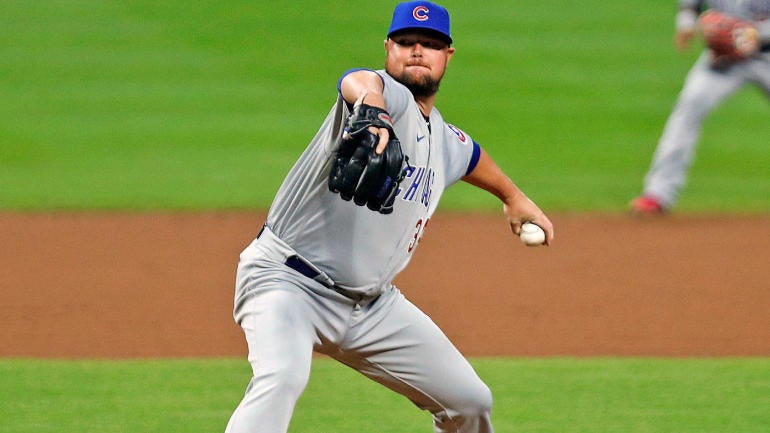
Veteran pitcher Jon Lester has had a stellar run with the Chicago Cubs, including winning the 2016 World Series. With Lester likely to become a free agent after the 2020 season, and no guarantee that he'll return to Chicago, he wanted to show his appreciation for the support that he received over his six years with the Cubs.

On Friday, Lester tweeted that he wanted to say "thank you" for the support and is buying a round of Miller Lite for anyone in Chicago. All fans have to do are stop by Hopsmith Tavern, The Lodge, Butch McGuire's, or She-nannigan's in Chicago to claim their free beverage.

It's certainly an awesome gesture from a player that was instrumental to the team's success during their World Series run in 2016. 

Lester has a $10 million buyout option for the 2021 season, which the Cubs are most likely going to exercise. If they choose to keep the veteran left-hander on his current deal, he would make $25 million next season.

During his final regular season start last month, Lester was emotional regarding his time with the Cubs and realized that it could've been his last start at Wrigley Field. 

Even if this is Lester's last go-round in Chicago, he certainly is leaving Cubs fans with a great going away present.


October 31, 2020 at 02:16AM
https://ift.tt/2GdUoS1

Cubs' Jon Lester thanks city of Chicago by buying fans a beer - CBS Sports

https://ift.tt/2NyjRFM
Beer

Craft beer returns to Old Town | Lifestyle | egcitizen.com - Elk Grove Citizen

sela.indah.link

A dozen years have passed since the Elk Grove Brewery and Restaurant closed its doors in Old Town Elk Grove. That neighborhood finally regained a brewery this month when the Hungry Pecker Brewing Company opened its taproom on Oct. 15.

This operation, located at the corner of Elk Grove Boulevard and Porto Rosa Drive, has a country music theme, a 10-barrel brewing system, and patio walls that resemble giant Lego blocks. Social distancing signs are also placed in the patio where most of the tables were set up.

“The neighborhood was very happy that we got it opened up,” co-founder Preston Hanford said. “We already had two or three employment inquiries, which is awesome.”

Hungry Pecker is Elk Grove’s fifth craft brewery to open in the past four years. The city is also home to the Dreaming Dog, Flatland, Tilted Mash, and Waterman breweries.

Last year, co-founder Brandon Smith told the Citizen that he doesn’t see the scene as a competition.

“Although business is business, and competition is competition – I don’t see it like that, I see it as a community,” the Elk Grove native said.  

As for Hungry Pecker’s name and woodpecker logo, Hanford said that the name stemmed from a running joke between Brandon and his brother Sean Smith. Those homebrewers enjoyed creating  brewery names on the spot.

The name, Hungry Pecker was inspired by the brothers’ hike near Hungry Packer Lake in the Sierras.

“(Sean) said, ‘Did you just say, ‘Hungry Pecker?’” Hanford said. “They thought that would be a great name for a brewery and it just stuck.”

The Smith brothers later created Hungry Pecker as a brand for their homemade beers they entered in competitions. Stickers that bore their woodpecker logo also turned up at businesses in Elk Grove, including Old Town Pizza and Taphouse.

The Hungry Pecker evolved into a commercial brewery last year after city officials approved their Old Town facility.

“Anybody can make good beer, but we feel like we’re going to make great beer with the process we’re setting up,” Brandon said.

He noted there will be a strong focus on the water during their brewing – each beer batch will have a different mineral concentration.

“Right now, we’re starting with a clean slate,” Brandon said, adding that the water’s natural mineral content will be removed and later added back in certain amounts.

During the Citizen’s visit, the brewery had three beers on tap – the staff said that an American-style lager and an India pale ale were in the works. Brandon said they ultimately plan to have 12 beers on tap.  

The brewery’s Possum Porter tap is decorated with a portrait of country music legend George Jones. Brandon pulled out a large portrait of Jones they also plan to display in their taproom. As part of the country motif, the taproom will also have a commissioned painting of other country icons Johnny Cash, Merle Haggard, and Wayland Jennings playing poker and enjoying Hungry Pecker beer.  

Brandon said that the taproom will start as a family-run operation.

“We’re trying to do it ourselves to get legs on this baby, and when it’s time to grow, we’ll revamp a few things,” he said.

For more information on the Hungry Pecker Brewing Company, visit their website, https://HungryPecker.com. They are located at 9251 Elk Grove Blvd. 


October 31, 2020 at 01:56AM
https://ift.tt/31Vwu5u

Craft beer returns to Old Town | Lifestyle | egcitizen.com - Elk Grove Citizen

https://ift.tt/2NyjRFM
Beer

Featured Post

PBR Created a 1776-Can Pack of Beer | Food & Wine - Food & Wine

sela.indah.link PBR Created a 1,776-Can Pack of Beer | Food & Wine Skip to content ...

Popular Posts