Rechercher dans ce blog

Sunday, January 31, 2021

Two Top Beer, Wine And Spirits Trends For 2021 - Forbes

sela.indah.link

Ask an alcohol industry analyst and they’ll tell you: If making predictions was a fool’s errand before the COVID-19 pandemic, the events of 2020 have made the game of prognostication even more iffy. 

However, I don’t entirely agree with that assessment. While COVID-19 has and will continue to disrupt the beverage market in ways that make many old patterns and expectations irrelevant and future planning highly dependent on variables we can’t control, we can tentatively forecast which existing and emerging paradigms will likely carry through to 2021 and beyond. 

It’s true that unknowns like the efficacy of the vaccine, the strength of the economy, the patchwork of lockdown regulations, and even ongoing supply chain irregularities create a very uncertain picture for the coming year. But anyone with an educated opinion can reasonably speculate that certain prior and pandemic-era trends, like virtual conferences, e-commerce and direct-to-consumer sales, will last.   

Even if the best we can do is expect to remain creative and flexible to withstand whatever comes, sometimes uncertainty is the only certainty we have. 

Wine and Spirits Sales 

Will the vaccine create herd immunity or will new virus variants render it obsolete? How quickly will the economy rebound? When will people feel safe going out again? These and other questions without answers lead consultants at Kearney, who’ve done what might be the nation’s most exhaustive analysis of the wine and spirits business for 2020 and 2021, to conclude that overall sales by volume will either grow as much as 3% this year or fall as much as 5.8%.

MORE FOR YOU

Among approximately 30 other factors, Kearney has reviewed most of 2020’s wholesale depletions, which include the majority of sales channels yet exclude tasting room sales, direct-to-consumer shipments and self-distributed companies. They present a range of scenarios that take into account how much or little Americans will venture out to celebrate this spring, summer, fall and winter.

In what Kearney calls its “Back to the Future'' predictive model, for example, “People will go back to 2019 consumption levels and live like we used to live,” said Aman Husain on a webinar hosted by the Wine and Sprits Wholesalers Association Thursday. “That means that Tuesday night glass of wine is going away.”

Despite that, in every one of their schemes Kearney consultants expect off-premises sales for at-home imbibing to keep growing at least a little bit but not at the levels we saw last year.

“I don’t think we can consume that much alcohol! And people will start to return to the on-premises,” said partner Sean Ryan. 

The on-premises, however, presents much more opportunity for volatility, depending on whether we continue our caution or release our pent-up demand. Whichever way it goes, they do expect spirits to follow 2020’s trajectory that saw them replacing wine as the preferred beverage to order at a restaurant.

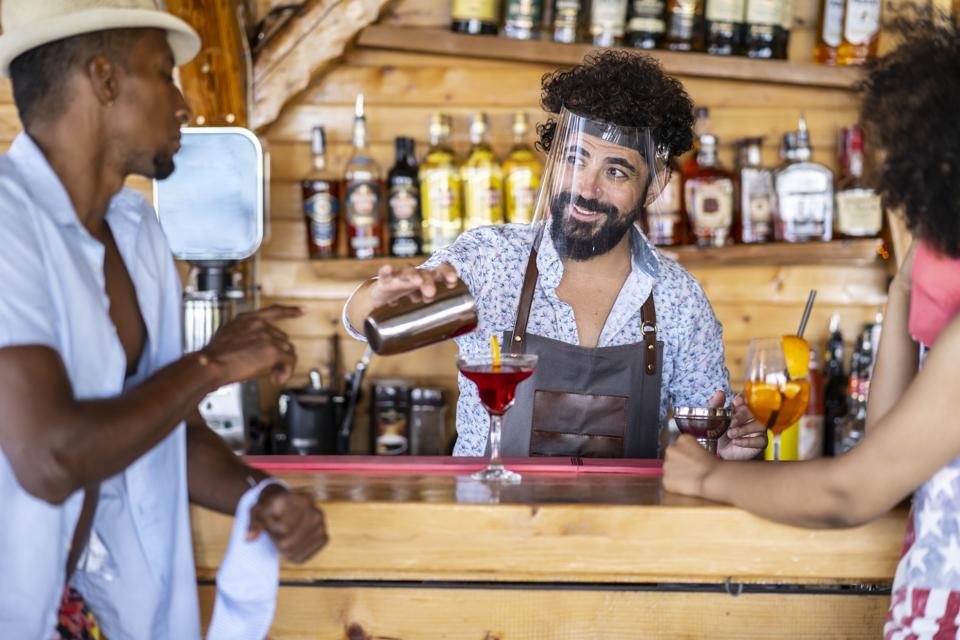
“The belief now seems to be that dining out is a special occasion and people say, ‘I’m going out, I’m going to indulge. A cocktail, now, it seems, is more special than wine,” said principal Michael Ooms.
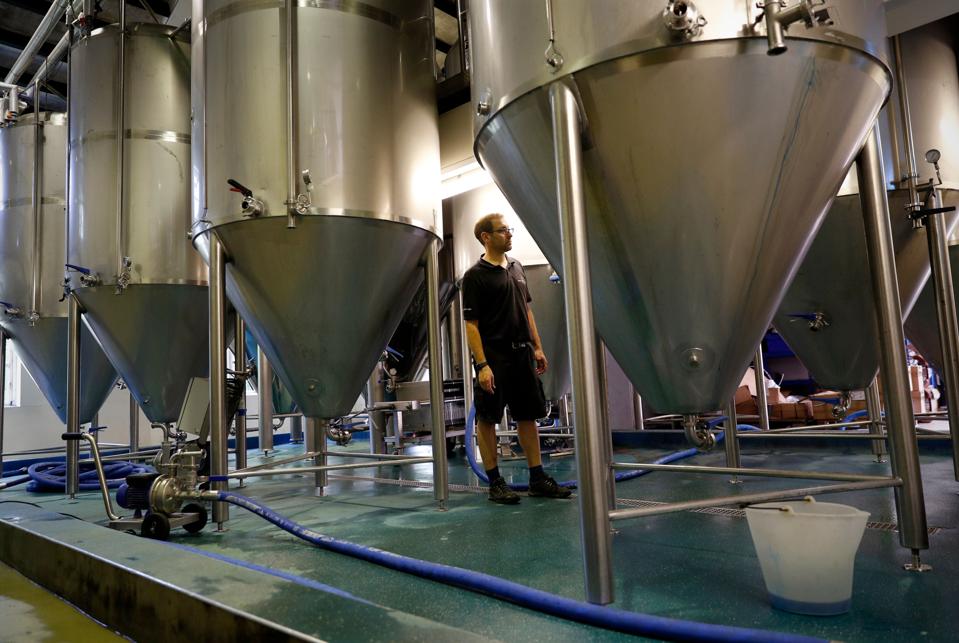
Differences in Beer Distribution

Before the pandemic, the majority of wholesalers were responding to a softening craft beer market by putting brakes on craft brands: no more selling endless beer skus and collecting and pushing niche breweries. During the pandemic and for probably the medium-term future, retailers want to play it safe by buying what they’re confident will sell, while breweries try to make up for COVID losses by sending beer to outside retailers that they would have previously sold through their high-touch taprooms. 

Post-pandemic, expect these trends to accelerate, sending more craft breweries to search harder for more favorable distribution models. As a few states finally liberalize their Prohibition-era franchise laws to allow breweries increased autonomy in self-distributing and getting out of their usually punishing distribution contracts (Massachusetts most recently), entrepreneurs are coming in to offer alternatives with more flexibility and lower barriers to entry.

American Craft Brands (ACB) is one such innovator. Offering a low-cost, limited a-la-carte service, American Craft Brands partners with what it calls “landers” who lease a warehouse and have a network of liquor-store and bar/restaurant contacts in their geographic region. ACB signs on breweries — from in-state or out — to supply product to landers as-needed. ACB files the requisite legal paperwork, and participating retail accounts can use one Internet portal to find out what that lander is selling and order what they want with just seven clicks. 

The brewery hires its own sales person in the territory — if it wants to  —  because the ACB doesn’t offer its own sales support. It does offer options like merchandising and it does partner with a relatively small trucking company to deliver from warehouse to store. 

What it doesn’t have is restrictive contracts. ACB takes a fixed cut of sales but doesn’t charge breweries any fees or require a long-term contract. 

Founder Jeff Slater says breweries that sign with a traditional distributor place a lot of burden on themselves and pay for services they’re not necessarily getting. “You sign an agreement you can’t get out of and you’ve locked your product in place before you even know if it’s going to work,” he says. “What we have done is a ‘distribution-light’ territory agreement so they only pay for what they're using. We have taken the distribution tier apart and said, ‘What do small brewers really need and how much is that worth?’”

I asked Brewers Association (BA) President and CEO Bob Pease if the craft brewers’ trade group would turn its focus on franchise reform now that Congress passed permanent federal excise tax relief in December — arguably the BA’s top legislative priority for the past decade. He replied that while franchise reform has always been a BA priority as it’s “an access to market issue,” that kind of lobbying chiefly happens at the state level, where the BA can support but not supplant local brewers guilds.

That said, the BA does have a position statement on the subject, which reads, in part, “Franchise laws were enacted to protect wholesalers from the undue bargaining power of their largest suppliers. Applying those laws to the relationship between a small brewer and the wholesaler is unfair and against free market principles. Where franchise laws exist, the BA believes that any brewer contributing a small percentage of a wholesaler’s volume should be exempted from those laws and free to establish a mutually beneficial contract with that wholesaler.”

With the smallest breweries generally having the least amount of leverage to survive the pandemic, they’re going to need all the relief they can get.


January 31, 2021 at 08:40PM
https://ift.tt/3r5g3xu

Two Top Beer, Wine And Spirits Trends For 2021 - Forbes

https://ift.tt/2NyjRFM
Beer

Falls brewery plan goes flat as landlord, Community Beer Works battle in court - Buffalo News

sela.indah.link
324-niagara-3

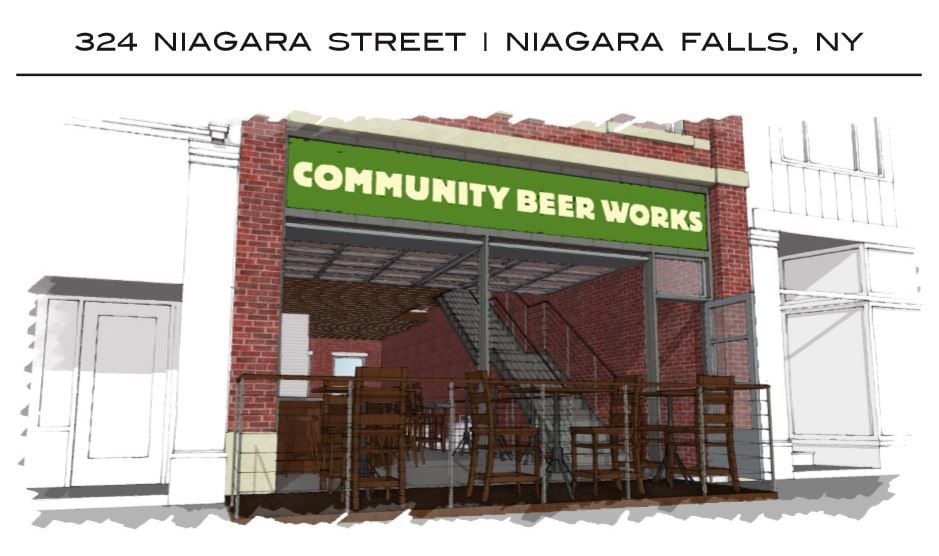
Plans were announced in November 2016 to turn the former Press Box Restaurant in Niagara Falls into a Community Beer Works Barrel House.

It seemed like a promising economic development idea when it was announced in 2016: placing a brewery and brewpub in a restored building in downtown Niagara Falls, within sight of the Rainbow Bridge to Canada.

But the project has collapsed in recrimination and litigation.

NFC Development Corp., the city economic development agency, pronounced last rites over the project last week by canceling two grants, totaling $200,000, that it had approved in 2017.

But in fact, the idea of a Falls location for Community Beer Works, the popular Buffalo craft brewer, had gone flat almost two years before the NFC vote on Wednesday.

In the fall of 2019, Savarino Development of Buffalo, which was to be the landlord for three buildings near the corner of Third and Niagara streets, had sued Community Beer Works, accusing the brewer of violating the lease it signed.

The building at 324 Niagara St. once housed the Press Box tavern. The city foreclosed on it because of unpaid property taxes but instead of auctioning it, the city issued a request for proposals, to which Savarino responded.

According to court papers, Savarino, doing business in the Falls as "324 Niagara Street Landlord LLC," signed a 10-year lease with Community Beer Works in September 2017. The brewer was to have 7,575 square feet of space for a rent of $13,000 a month.

That was 43% of the available space in the buildings Savarino had placed under a sale contract earlier that year. The one at 324 Niagara was owned by the city; the others were privately owned.

324-niagara-4

Plans for Community Beer Works Barrel House in Niagara Falls.

Savarino was to have the buildings ready by July 1, 2018, but its court papers say it ran into problems obtaining clear title and extended that date by a year.

In the meantime, the lawsuit said, Savarino and its lenders began to question Community Beer Works' commitment to the project and its financial ability to pay the rent, the court papers say.

On Feb. 27, 2019, the landlord sought a recommitment in writing, but Community Beer Works never provided it, according to the lawsuit.

Savarino then sent the brewer a notice of default, canceled the lease and sued Community Beer Works for $2.38 million in damages.

The brewer replied that the lease was not enforceable since it didn't contain a firm date for moving in. Its court papers accused the landlord of "multiple misrepresentations of material fact."

"It had neither a plan nor an intention of delivering the premises to CBW within the time frame it had represented and, in fact, had every intention of

delaying delivery of the premises by well over a year," the Beer Works' reply charges.

Beer Works allowed Savarino's company an extension of the occupancy date until July 1, 2019, but when 324 Niagara asked for an extension to July 1, 2020, the brewer said no and accused the landlord of breaching the lease.

The brewer demanded damages from the landlord in an amount to be determined in court.

"Development projects succeed or fail for many reasons," said Chris Smith, Community Beer Works' co-founder and vice president. "We'll let the legal process unfold and allow the courts to consider those reasons and make a judgment. We're confident in our position."

"The project doesn't make sense financially without the grant funds," said Samuel Savarino, the landlord. He said he has no other projects in mind for the site and has not built anything in the buildings.

He said in addition to spending $335,000 to buy the real estate, he's spent about $250,000 on preparatory work.

Mayor Robert M. Restaino said the grants were dependent on the project being completed by the end of 2019. Savarino asked for and received an extension until Sept. 1, 2020, but nothing happened with the project.

"The terms of the agreement expired," Restaino said. The same thing happened with a USA Niagara Development Corp. incentive.

Restaino said Savarino could reapply if he comes up with another project.


February 01, 2021 at 01:30AM
https://ift.tt/2McQMmp

Falls brewery plan goes flat as landlord, Community Beer Works battle in court - Buffalo News

https://ift.tt/2NyjRFM
Beer

Temperance Announces ‘Where I’m From’ Beer to Benefit Reparations Fund - Evanston RoundTable

sela.indah.link

Today we are proud to release a unique new beer that celebrates and supports an Evanston first: The City of Evanston Reparations Fund. The City of Evanston recently created the forward-thinking fund to address, in part, wealth and opportunity gaps that Black Americans experience as a result of historical racism and discrimination. 

Thanks to the leadership of 5th Ward Alderman Robin Rue Simmons, the City Council, and the Evanston community, Evanston, Illinois is the first municipality in the country — and the world — to have created a reparations fund for its Black residents. “We took the first step towards repair in the Black community by passing our reparations policy with dedicated funding,” says Simmons. “As our community works to develop remedy policies, it is important that we grow our fund to meet the goals for our Black community.” In addition to funding provided by a 3% tax on local marijuana sales, individuals and organizations may donate to the fund. 

“I am so proud of the leadership that the City Council has shown with the fund,” our founder and Evanston native Josh Gilbert explains. “It’s just a start, but it’s an important start, and we wanted to lend our voice and financial support in a way that will hopefully inspire others.” 

Alderman Simmons responds, “Good leadership demonstrated by Temperance Beer is an example of the collective new direction in our City.” 

The beer is called Where I’m From, an homage to the Digable Planets’ song of the same name. “Evanstonians have fierce hometown pride,” says Gilbert, “so we are proudly proclaiming where we’re from — and where we’re going — through this beer,” a hazy India Pale Ale with vanilla, tangerine, and orange peel. While we had originally intended to contribute 13% of the proceeds to the fund, we recently decided to increase the amount to 100%.

“Temperance Beer has always been a thoughtful ally showcasing Black culture. I was not surprised to learn the owner, Josh Gilbert, was not only in support, but ready to take action,” states Alderman Simmons, “and commissioned the incredible talent of Maia Faith for the artwork.” 

Maia Faith, the Evanston artist who designed the label, says that she “felt honored that Temperance entrusted me with bringing the visual representation of reparations in Evanston to life.” With her suitable-for-framing design, she explains the two characters are “separate yet connected,” and “as Evanston moves forward together, we are turning over a new and necessary leaf. When focusing specifically on the Black community, the tree signifies roots (history) and strength.” She goes on to explain the background “pale yellow/beige color makes one think of something old (the past)” while the “lush green of the leaves stands out, showing the possibility of life.” She concludes, “the leaves are not static, but rustling in the wind — the wind of change.” 

“On behalf of our City of Evanston and the ward where Temperance Beer Co. started, we stand with you as you take this historic step with our Local Reparations Fund,” says Evanston 2nd Ward Alderman Peter Braithwaite, adding, “you make me proud of where I am from.” 


January 31, 2021 at 09:59PM
https://ift.tt/3pCGwlw

Temperance Announces ‘Where I’m From’ Beer to Benefit Reparations Fund - Evanston RoundTable

https://ift.tt/2NyjRFM
Beer

Two Top Beer, Wine And Spirits Trends For 2021 - Forbes

sela.indah.link

Ask an alcohol industry analyst and they’ll tell you: If making predictions was a fool’s errand before the COVID-19 pandemic, the events of 2020 have made the game of prognostication even more iffy. 

However, I don’t entirely agree with that assessment. While COVID-19 has and will continue to disrupt the beverage market in ways that make many old patterns and expectations irrelevant and future planning highly dependent on variables we can’t control, we can tentatively forecast which existing and emerging paradigms will likely carry through to 2021 and beyond. 

It’s true that unknowns like the efficacy of the vaccine, the strength of the economy, the patchwork of lockdown regulations, and even ongoing supply chain irregularities create a very uncertain picture for the coming year. But anyone with an educated opinion can reasonably speculate that certain prior and pandemic-era trends, like virtual conferences, e-commerce and direct-to-consumer sales, will last.   

Even if the best we can do is expect to remain creative and flexible to withstand whatever comes, sometimes uncertainty is the only certainty we have. 

Wine and Spirits Sales 

Will the vaccine create herd immunity or will new virus variants render it obsolete? How quickly will the economy rebound? When will people feel safe going out again? These and other questions without answers lead consultants at Kearney, who’ve done what might be the nation’s most exhaustive analysis of the wine and spirits business for 2020 and 2021, to conclude that overall sales by volume will either grow as much as 3% this year or fall as much as 5.8%.

MORE FOR YOU

Among approximately 30 other factors, Kearney has reviewed most of 2020’s wholesale depletions, which include the majority of sales channels yet exclude tasting room sales, direct-to-consumer shipments and self-distributed companies. They present a range of scenarios that take into account how much or little Americans will venture out to celebrate this spring, summer, fall and winter.

In what Kearney calls its “Back to the Future'' predictive model, for example, “People will go back to 2019 consumption levels and live like we used to live,” said Aman Husain on a webinar hosted by the Wine and Sprits Wholesalers Association Thursday. “That means that Tuesday night glass of wine is going away.”

Despite that, in every one of their schemes Kearney consultants expect off-premises sales for at-home imbibing to keep growing at least a little bit but not at the levels we saw last year.

“I don’t think we can consume that much alcohol! And people will start to return to the on-premises,” said partner Sean Ryan. 

The on-premises, however, presents much more opportunity for volatility, depending on whether we continue our caution or release our pent-up demand. Whichever way it goes, they do expect spirits to follow 2020’s trajectory that saw them replacing wine as the preferred beverage to order at a restaurant.

“The belief now seems to be that dining out is a special occasion and people say, ‘I’m going out, I’m going to indulge. A cocktail, now, it seems, is more special than wine,” said principal Michael Ooms.

Differences in Beer Distribution

Before the pandemic, the majority of wholesalers were responding to a softening craft beer market by putting brakes on craft brands: no more selling endless beer skus and collecting and pushing niche breweries. During the pandemic and for probably the medium-term future, retailers want to play it safe by buying what they’re confident will sell, while breweries try to make up for COVID losses by sending beer to outside retailers that they would have previously sold through their high-touch taprooms. 

Post-pandemic, expect these trends to accelerate, sending more craft breweries to search harder for more favorable distribution models. As a few states finally liberalize their Prohibition-era franchise laws to allow breweries increased autonomy in self-distributing and getting out of their usually punishing distribution contracts (Massachusetts most recently), entrepreneurs are coming in to offer alternatives with more flexibility and lower barriers to entry.

American Craft Brands (ACB) is one such innovator. Offering a low-cost, limited a-la-carte service, American Craft Brands partners with what it calls “landers” who lease a warehouse and have a network of liquor-store and bar/restaurant contacts in their geographic region. ACB signs on breweries — from in-state or out — to supply product to landers as-needed. ACB files the requisite legal paperwork, and participating retail accounts can use one Internet portal to find out what that lander is selling and order what they want with just seven clicks. 

The brewery hires its own sales person in the territory — if it wants to  —  because the ACB doesn’t offer its own sales support. It does offer options like merchandising and it does partner with a relatively small trucking company to deliver from warehouse to store. 

What it doesn’t have is restrictive contracts. ACB takes a fixed cut of sales but doesn’t charge breweries any fees or require a long-term contract. 

Founder Jeff Slater says breweries that sign with a traditional distributor place a lot of burden on themselves and pay for services they’re not necessarily getting. “You sign an agreement you can’t get out of and you’ve locked your product in place before you even know if it’s going to work,” he says. “What we have done is a ‘distribution-light’ territory agreement so they only pay for what they're using. We have taken the distribution tier apart and said, ‘What do small brewers really need and how much is that worth?’”

I asked Brewers Association (BA) President and CEO Bob Pease if the craft brewers’ trade group would turn its focus on franchise reform now that Congress passed permanent federal excise tax relief in December — arguably the BA’s top legislative priority for the past decade. He replied that while franchise reform has always been a BA priority as it’s “an access to market issue,” that kind of lobbying chiefly happens at the state level, where the BA can support but not supplant local brewers guilds.

That said, the BA does have a position statement on the subject, which reads, in part, “Franchise laws were enacted to protect wholesalers from the undue bargaining power of their largest suppliers. Applying those laws to the relationship between a small brewer and the wholesaler is unfair and against free market principles. Where franchise laws exist, the BA believes that any brewer contributing a small percentage of a wholesaler’s volume should be exempted from those laws and free to establish a mutually beneficial contract with that wholesaler.”

With the smallest breweries generally having the least amount of leverage to survive the pandemic, they’re going to need all the relief they can get.


January 31, 2021 at 08:40PM
https://ift.tt/3r5g3xu

Two Top Beer, Wine And Spirits Trends For 2021 - Forbes

https://ift.tt/31lUVcw
Wine

Off the vine: Are you an iron-willed wine lover? - Worcester Telegram

sela.indah.link

When it comes to wine, are you tough-minded, uncompromising and fearless? If so then you just might have the makings of an iron-willed wine lover. Believe it or not this is a good thing. You see, too many people are willing to accept the status quo and drink any old wine. However, that’s not what being a true wine lover is all about.

You must be courageous and try new wines from regions around the world. Be brave and bold, not meek and mild. Sure, uncorking a bottle of wine from South Australia might sound intimidating, but one taste can alter your whole perception. I get it, you’re comfortable with the everyday wines you’ve been  drinking all these years. So what, take the plunge and give the Aussie a try. This could indeed be a major turning point in your life. You might be pleasantly surprised and find that it’s a wine you really enjoy. By the way, Penfolds 2018 Kalimna Bin 28 Shiraz is a delicious wine and a great introduction to Australian wines.

It happens all the time, someone stops by their local wine shop and picks any bottle from the rack. They don’t even take the time to read the label. Instead it’s off to the checkout and away you go. I’m willing to bet that if a label had just one word that read “wine” and the price was under $10 a bottle, people would buy cases of it. That of course is the easy way out.

Now I’m not saying that you have to splurge each and every time you buy wine. What I am suggesting is that you take a moment to understand the wine, the producer and region of origin. This is where the iron will comes into play. Most wine lovers should expect the best wine for the money and never settle for second best.

Step out of your comfort zone and you’ll find a wine lover's paradise filled with marvelous selections you didn’t even know existed. Sure, Merlot or Pinot Noir have always been a safe haven. Both are terrific wines, that I too enjoy. But this time reach for a Sangiovese from Italy or a Grenache from the Southern Rhone region of France where this grape tends to flourish. These are red wines that you really owe it to yourself to try. Find the resolve to be a little more daring.

As for whites, Chardonnay is widely popular but this time around how about a Gruner Vetliner from Austria? This varietal is dry with peach, citrus and white pepper notes. It’s both refreshing and pairs well with food. You could also give Verdejo a try. Clean and crisp with flavors of lime, lemon, grapefruit and citrus notes, this delightful white from Spain will make a believer out of you. For about $15 Bodegas Naia makes a sleek and tasty Verdejo.

Perhaps this all sounds a bit scornful but that’s not the intent. The hope is that it inspires all wine lovers to never get locked into a particular wine or region. There’s a lot of wine out there and it’s yours for the taking. So the next time you shop for wine, vow to purchase at least one bottle that you’ve never tried before. I’m willing to bet you’ll be pleasantly surprised. All it takes is the will. Cheers

Wine of the week: Perticaia, 2017 Montefalco Rosso, Italy. Ripe and generous with crushed raspberry, fleshy cherry and hints of baking spice alongside taut tannins that give this wine depth. $24


January 31, 2021 at 05:27PM
https://ift.tt/36vCgwW

Off the vine: Are you an iron-willed wine lover? - Worcester Telegram

https://ift.tt/31lUVcw
Wine

When Craft Beer Was Born - Traverse City Ticker

sela.indah.link
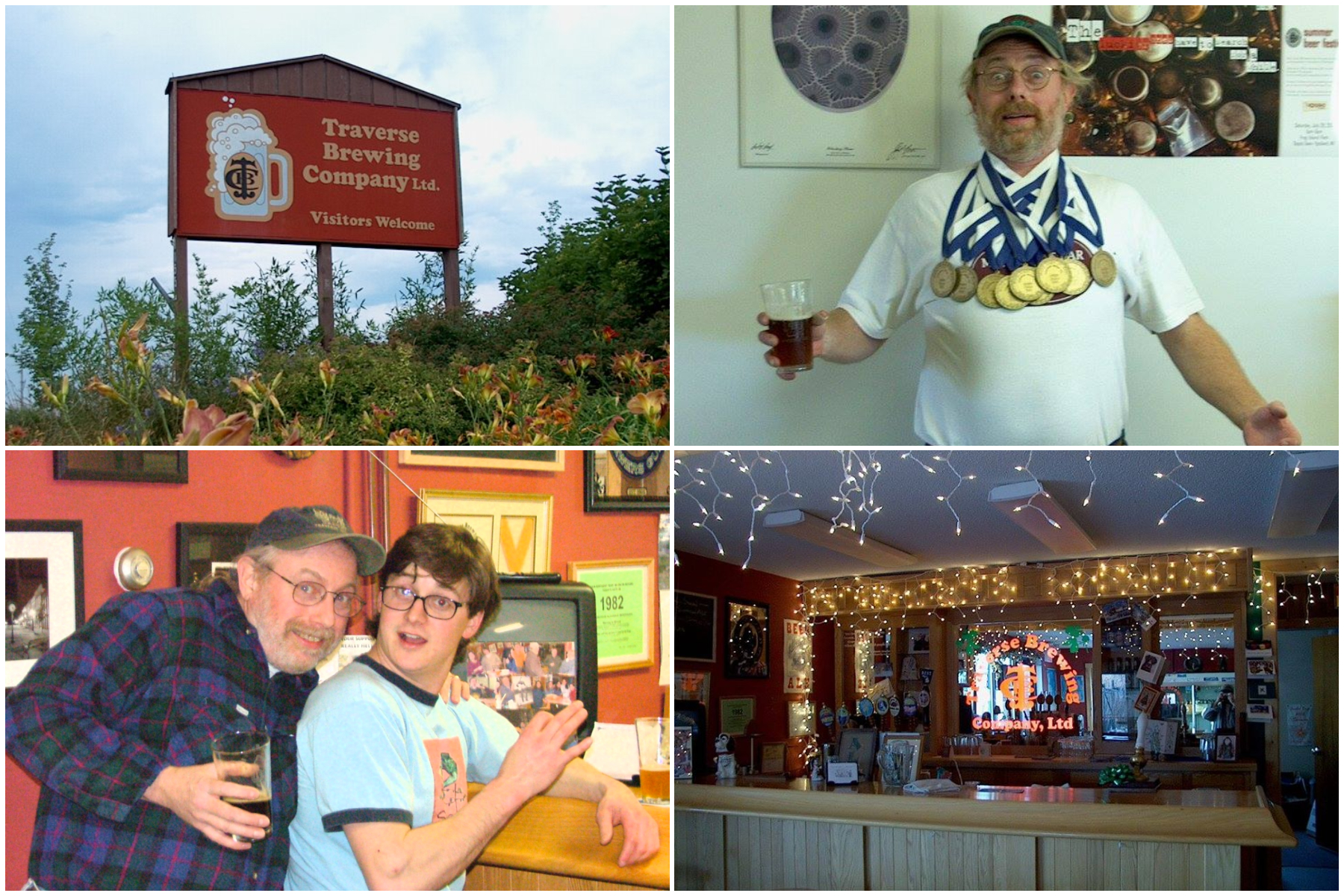
These days, you can’t go far in northern Michigan without finding yourself at the doors of a craft brewery. Long before Traverse City was a recognized beer town, though – and before Michigan even had 10 craft breweries to its name – an Ohio transplant named Jack Archiable took a chance on a property in Williamsburg and started a business called Traverse Brewing Company. It was the birth of craft beer in northern Michigan, and a place many of today’s brewing luminaries got their start.“I have brewing in my DNA,” Archiable tells The Ticker. That trait started with his great grandfather, who once worked as a brewmaster for a brewery in Hamburg, Germany. It continued with his grandfather, who immigrated to the United States, got a job at a brewery in Brooklyn, New York, and worked his way up to an assistant brewer position.The heritage meant that Archiable was raised in a culture of beer from a very young age. “I started drinking beer when I was about 10 or 12 years old,” he recalls. “My dad used to call me ‘the Beer Baron.’” Unsurprisingly, when Archiable went off to college and grad school, he found himself working around beer. And as a bartender at the University of Cincinnati Student Union, he invented his first makeshift brew.“I would take a pitcher, and I would pour a bottle of Guinness in it, and then I’d fill it up the rest of the way with Rolling Rock,” he says. “It caught on and people loved it. We called it a ‘super black and tan’ and it sold like crazy.”One night, after enjoying a few super black and tans with friends, Archiable met the person who would become his mentor.“As we’re leaving the bar, this guy follows us out and says, ‘So you guys like beer, huh?’” Archiable says. “And we’re like, ‘Yeah, what’s up?’ And he says, ‘Well, I make beer. Would you like to try some of my homemade beer?’ So we followed him back to his house, and he took us down to the basement, and he had about eight batches of beer bubbling away.”Despite the slasher film undertones, that moment changed Archiable’s life. He and his friends immediately fell in love with the stranger’s home-brewed beer, and Archiable became the guy’s unofficial brewing apprentice, learning the ropes of making beer in a dingy basement in Athens, Ohio.Those basement lessons gave Archiable the knowledge, experience, and beer-brewing chops he needed to start his own brewery, which he did in January 1996 at 11550 US-31 South in Williamsburg, in the building now occupied by 365 Outdoor. Traverse Brewing Company became the seventh licensed craft brewery In Michigan; today, there are more than 300. It also had the distinction of making the first beer brewed in northern Michigan since the prohibition era, an honor that belonged to Archiable’s Manitou Amber Ale.If the Manitou Amber sounds familiar, that’s because you can still find it on tap and on store shelves throughout Michigan. Today, it’s brewed by Traverse City’s Brewery Terra Firma, whose founder John Niedermaier was just one of several notable figures in local beer who got his start working at Traverse Brewing. The alumni list also includes Joe Short and Russell Springsteen, who would go on to found Short’s Brewing Company and Right Brain Brewery, respectively.Niedermaier, Short, and Springsteen were all passionate homebrewers when they came to work at Traverse Brewing Company, but had never held jobs in a commercial brewing setting. From converting homebrew recipes to commercial batches to the entire process of making, marketing, and selling beer as a business, the three stumbled through the learning curve of commercial brewing along with Archiable. Today, all three credit Traverse Brewing with giving them the skills and knowledge they would use to launch their own businesses.“Traverse Brewing was really a think tank,” says Niedermaier. “It was a lot of smart, creative people that were really into brewing, into beer, and into the science behind it, the art behind it. It was a great incubator.”Short was only 20 years old when he landed his job at Traverse Brewing, getting his foot in the door not by filling out an application, but by bringing in a few bottles of his homebrewed beer (“They graded a few of [my beers] and then told me to come back when I was 21,” Short laughs). Short only stayed at Traverse Brewing for six months, but he recalls the experience as being extremely formative.“It was certainly a super special time for me,” Short says. “It was magical to be a part of something that was just on the brink of explosion, as an industry, and to experience that while being so naive and so young, and just full of excitement and ambition.”Eventually, the story came to an end. In January 2008, Archiable found an unwelcome notice on the door to his brewery. It was from the Michigan Liquor Control Commission (MLCC), effectively ordering Traverse Brewing to shut down over allegedly unpaid beer taxes. It took months for Archiable to convince the MLCC that they’d made a mistake, and when he did, there was still a caveat: If Archiable wanted to keep brewing, he’d need to reapply for licenses at both the state and federal levels – a process that would take months and leave him unable to operate his business in the interim. As far as Archiable saw it, it was game over either way.And so Archiable let Traverse Brewing die. He stopped making loan payments and let the bank take over the building, the equipment, and the branding. He then went to work for Short’s for 10 years.Today, Archiable is retired, but his influence still lingers over northern Michigan beer. Soft Parade, for instance – a flagship beer at Short’s – is a tip-of-the-hat to Traverse Brewing, named after the Doors album that Archiable would play at the end of every brewing shift. Niedermaier, meanwhile, is still brewing beer on the old Traverse Brewing system, including several recipes – the Manitou Amber, the Sleeping Bear Brown, the Batch 500 IPA, among others – that Archiable invented at Traverse Brewing.As for Springsteen, he says the local brewing scene would likely look very different if Archiable hadn’t come along 25 years ago.“We all owe a lot to Jack,” Springsteen says. “He pioneered through a lot and he paved the road for all of us. He’s the Godfather of northern Michigan brewing.”


January 31, 2021 at 12:00PM
https://ift.tt/36rddLn

When Craft Beer Was Born - Traverse City Ticker

https://ift.tt/2NyjRFM
Beer

Saturday, January 30, 2021

Mazza Wine Vineyard creates winter treat known as ice wine - YourErie

sela.indah.link

Craving something sweet? Mazza Wine Vineyard is creating something that is a true winter treat.

We spoke with one vineyard for more on this story.

The ice wine is a seasonal treat that can only be produced during the winter. Mazza Vineyards is one of the only wine vineyards in the United States that creates this delicacy.

What is better than drinking your dessert? How about a wine two times more sweet than a can of Coca-Cola.

“It’s different compared to any other thing you are going to have. For me it’s more similar to a mead because of the sweetness,” said Matt Draveck, Production Employee at Mazza Wine Vineyard.

The beginning of grape harvesting process is very detailed.

“We let the grapes sit out here well past the typical harvest in late October. We net them, we let them dehydrate on the vine and typically we are looking under 17 degrees Fahrenheit so they actually freeze on the vine when we press them,” said Mario Mazza, General Manager of Mazza Wine Vineyard.

So much work goes into pressing and fermenting the ice wine that Mazza said it is a labor of love.

“We are hand harvesting. We are bringing them back into the winery. We will start pressing those and that pressing process basically yields us that really sweet juice. We will take that and go ahead and start the fermentation,” said Mazza.

Now it’s really important to remember when picking the grapes that they must remain frozen from the time they are picked to the time they are being processed.

“The freezing really gives you that concentrated juice if they thaw back out then you know we lose that concentration we worked so hard to get with timing it right with mother nature. So that’s really important. We stack them up and put them in an isolated space so they stay frozen,” said Mazza.

This process is worth the wait to taste the delicious wine.

“The fermentation is slow. We want to retain all the characters. It’s a cool slow ferment so yeah this wine will probably be released by 2022,” said Mazza.

These specific grapes that make the wine are vidal blanc and are perfect for ice wine because they have a thicker skin and can freeze better without breaking.

This has been a tradition for over 40 years now for Mazza Vineyard and is something everyone can enjoy.


January 31, 2021 at 06:13AM
https://ift.tt/39Ajtm5

Mazza Wine Vineyard creates winter treat known as ice wine - YourErie

https://ift.tt/31lUVcw
Wine

Featured Post

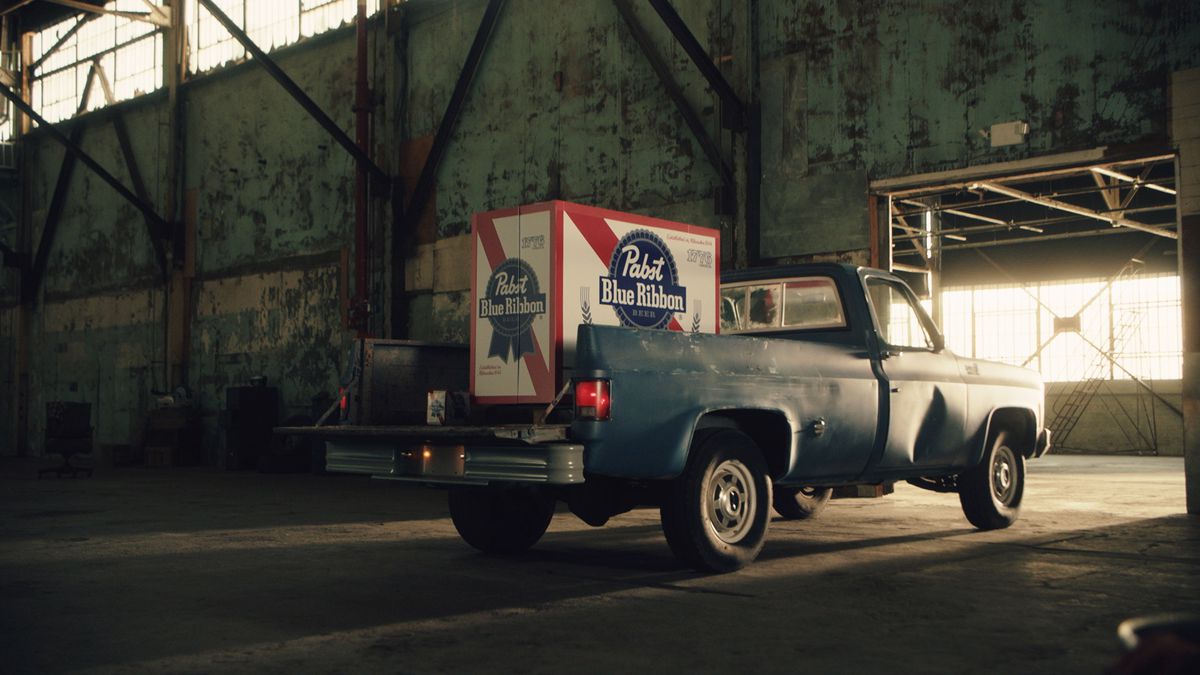
PBR Created a 1776-Can Pack of Beer | Food & Wine - Food & Wine

sela.indah.link PBR Created a 1,776-Can Pack of Beer | Food & Wine Skip to content ...

Popular Posts