Rechercher dans ce blog

Wednesday, March 31, 2021

Wine Forward Spritzer Launches From Award-winning Line 39 Wines - KPVI News 6

sela.indah.link

LARKSPUR, Calif., March 31, 2021 /PRNewswire/ -- Award-winning premium California wine brand, Line 39, announces the first varietal-based wine spritzer with Line 39 Spritzers (SRP $12.99/4pk). Launching in the better-for-you category Line 39 Spritzers are only 100 calories with 5% alcohol and ready to be enjoyed in convenient single-serving 250ml resealable aluminum bottles. Line 39 Spritzers offer a premium wine-based alternative for the avid wine drinker offering the same Line 39 wines consumers know and love, with no added sugar, fewer calories, lower alcohol and a kick of spritz.

"We are witnessing a growing demand for low-calorie, better-for-you options, and as always, our nimble and consumer-forward company is looking to meet that demand, this time with Line 39 Spritzers," comments Christine Moll, Chief Marketing Officer of O'Neill Vintners & Distillers, producers of Line 39 wines.

Made with only three ingredients, this new spritzer boasts Line 39 wine, sparkling water, and a hint of natural fruit flavor. Featuring three varietal-based options—Sauvignon Blanc, Rosé, and Pinot Noir—Line 39 includes the same premium varietal wines in its spritzer as enjoyed in its 750ml bottles. In a class of its own, and opting for transparency and quality, the launch of Line 39 Spritzers is led by the sophisticated wine-forward blend. Staying true to each varietal, all fruit flavors have been carefully selected and paired to enhance the wine grape varietal characteristics: Sauvignon Blanc with a hint of lemon, Rosé with a hint of strawberry and Pinot Noir with a hint of black cherry.

"We are excited to offer a new avenue for wine enthusiasts to enjoy wine," comments Line 39 Head Winemaker Steven DeCosta. "Our primary focus was to lean on our existing Line 39  high-quality wines and add a delicious, yet simple twist." 

The category of sparkling low alcohol beverages and wine-based cocktails is on the rise, including premium wine-based spritzers, a cousin to the hard seltzer category. According to Nielsen period ending January 23, 2021, the wine-based cocktail category has seen exponential growth, increasing 103.6% compared to average growth the last 52 weeks and has maintained triple digit growth in the last 26 week, 13 week, and four-week time periods.

The trend is here to stay: a June 2020 Drizly survey showed 60% of spritzer/seltzer consumers are interested in trying new brands. Over 20% of the category is considered 'New Items'. Consumers are looking for line extensions of wines they already love with 88% interested in wine brand spritzers and 82% willing to pay a premium for a varietal-specific offering.

As a widely recognized wine brand with continued growth and momentum, Line 39 has received "Best Buy" awards from Wine Enthusiast magazine in 2020 for all nine of its nationally distributed varieties and is now a top 100 wine brand. Line 39 grew at a 29% increase with 600,000 cases shipped over 12 months per Nielsen period ending October 31, 2020.

Cision View original content to download multimedia:http://www.prnewswire.com/news-releases/wine-forward-spritzer-launches-from-award-winning-line-39-wines-301259698.html

SOURCE O’Neill Vintners & Distillers


March 31, 2021 at 09:00PM
https://ift.tt/31C63kt

Wine Forward Spritzer Launches From Award-winning Line 39 Wines - KPVI News 6

https://ift.tt/31lUVcw
Wine

California holds Napa County in red tier of reopening, delaying indoor wine tasting return - North Bay Business Journal

sela.indah.link

It’s one step forward, two steps back for Napa County.

The county, which was poised this week to graduate from the red tier (“substantial” risk of infections) to the orange tier (“moderate”) in the California’s Blueprint for a Safer Economy, has confirmed it will be held back because of a spike in new COVID-19 cases.

Napa County’s daily new case rate jumped from 2.8 per 100,000 residents last week to 4.7, falling back over the weekend into the red tier, according to Napa County spokeswoman Janet Upton. To move to orange, the new infection rate would have to be between 1 and 3.9 daily cases.

In addition to the 4.7 new cases, the state reported today that Napa County had a test positivity rate of 2% and a health-equity rate of 3.4%. The latter two figures, though higher than last week, still fall within range for the orange tier.

Napa was one of three counties in the state that started the week on track to move to the orange tier but were ultimately denied that opportunity. The others are Calaveras, El Dorado and Imperial counties.

With Napa County staying in the red tier, Marin remains the only county in the North Bay area to have moved to the orange tier, which happened last week. Sonoma, Solano, Mendocino and Lake counties are still in the red tier.

In order to advance to the orange tier, a county’s new daily COVID-19 cases must fall between 1 and 3.9 per 100,000 residents for two consecutive weeks. In the red tier, there can be between 4 and 10 new cases per 100,000 residents.

But there’s a pathway for Napa County to move to the orange tier before another two weeks pass by.

As soon as the state distributes a total of 4 million vaccine doses to underserved communities, the tier qualifications will be relaxed. To date, the state has distributed over 3.6 million doses of the vaccine, according to the state Department of Public Health.

“In doing some back-of-the-napkin math, we anticipate that could occur early next week,” Dr. Karen Relucio, Napa County’s public health officer, confirmed in a statement to the Business Journal. If so, the county would advance within the following two days, she said.

For businesses, the most notable differences for operating in the red tier versus the orange tier are more indoor capacity and the ability to reopen winery tasting rooms inside, expanding a major economic engine for Napa Valley.

In the red tier, restaurants, wineries and bars can operate indoors at 25% capacity or 100 people, whichever is fewer. That number doubles under the orange tier.

“We were excited and gearing up to be open inside,” said Tom Davies, general manager of V. Sattui Winery in St. Helena. “It gives us flexibility to operate. But we’ve been having spectacular weather, and even post-pandemic our industry should be supporting tasting outside. I think we’re discovering what the Europeans experience with their outdoor piazzas.”

The major destination for Napa Valley wine visitors has expansive outdoor grounds, but it has always concentrated its tasting experience indoors. What V. Sattui is losing out on with the continued ban on indoor visitation while the county is in the red tier is exclusive tastings in the cellar and private rooms, and the winery had a number of inquiries about that just this past weekend, Davies said.

"Many of us have figured out how to do this outside,” he said. “The challenge was last summer with 100-degree heat and the fires.”

But for now, the winery is benefiting from a growing flow of visitors to Napa Valley.

“A lot of people coming in are fully vaccinated and feel bulletproof,” Davies said.

As part of a major effort by Napa Valley wine trade groups to get workers vaccinated, V. Sattui has been arranging shots for its 85 vineyard, production and food service employees. The production crew got their shots Monday, and second doses are scheduled for food service and vineyard workers this week and next.

When it comes to restaurants, staying in the red tier with limited indoor capacity is a big deal for some.

"Sure, it's disappointing. We definitely have demand for indoor dining. People do actually want to be inside — some want to see the TV," said Cynthia Ariosta, owner of Pizzeria TraVigne in St. Helena.

Ariosta also expressed dismay the state has failed to set guidelines for events and catering, which she performs at her Main Street eatery.

"There's no standard for caterers, but Disneyland has opened up. If I can have 10 tables of six set up, why can't I have the same at an event with people who know each other? It's unfair," said the restaurateur, who invested $3,000 in building a dividing wall inside her restaurant as a safety precaution for when indoor dining is allowed. It's now offered in Napa County in the red tier at 25% capacity.

Ariosta estimated she lost $1 million in business in 2020.

As a lead plaintiff, Ariosta joined 50 other restaurants and wineries in a coalition that sued the state over shutdown orders on a claim they failed to present evidence that outdoor dining contributed to the spread of COVID-19. The Wine Country Coalition for Safe Reopening dropped the suit when Gov. Gavin Newsom ordered the post-holiday reopening to the outdoor business.

Other local restaurant operators said they are less affected by limited indoor dining.

"Everybody still wants to be outside. It's a tremendous asset," said Erin Riley, owner of Be Bubbly, in downtown Napa. Riley had a parklet, or outdoor dining area, built last week. "People are loving it. They only want to go inside if it's too hot, too rainy or too cold. It's the best thing that happened to downtown Napa."

Napa City Manager Steve Potter agreed with Riley.

"For me, it doesn't matter what tier we move into. We could be fully open,” he said. “We plan to keep parklets in place for at least through the summer."

Retail establishments and indoor malls in the red tier may operate at 50% capacity and keep food courts closed. In orange, the stores can fully reopen and food courts can open at 50% capacity or 200 people, whichever is lower. Gyms and fitness studios can operate indoors at 10% capacity under the red tier, and at 25% in orange.

Once in the orange tier, counties also can begin to reopen outdoor venues for sports and live performances, with capacity limited at 20%. Reservations and assigned seating will be required, and only people living within 120 miles of the region can attend an event. Maximum capacity expands to 33% starting April 1.

Other counties in the state that will advance from the red to orange tier this week are Alameda, Butte, Colusa, Los Angeles, Modoc, Orange, Santa Cruz and Tuolumne.

This is a developing story. Please check back for updates.


March 31, 2021 at 03:07AM
https://ift.tt/3fu4pK6

California holds Napa County in red tier of reopening, delaying indoor wine tasting return - North Bay Business Journal

https://ift.tt/31lUVcw
Wine

How Wiedemann's won the 2021 Cincinnati's Favorite Beer competition - Cincinnati.com

sela.indah.link
[unable to retrieve full-text content]How Wiedemann's won the 2021 Cincinnati's Favorite Beer competition  Cincinnati.com


March 31, 2021 at 08:44AM
https://ift.tt/3cBOYOb

How Wiedemann's won the 2021 Cincinnati's Favorite Beer competition - Cincinnati.com

https://ift.tt/2NyjRFM
Beer

New brews from Faubourg start replacing Dixie Beer; fresh labels, new beers - Houma Courier

sela.indah.link

Like a head of pilsner foam rising over the mug, Faubourg Brewing Co. is starting to build steam.

The official rollout is now underway for Faubourg as the new brand for the former Dixie Beer. The first beers brewed under that name are flowing at Faubourg's taproom in New Orleans, where local bands perform in the beer garden each weekend and taproom staff guide visitors through the new varieties.

That beer began shipping in kegs from the brewery last Friday and should be in New Orleans-area restaurants and bars and ready to serve this week. Canned and bottled beer under the Faubourg name will follow later this spring, with distribution slated for May.

More: Dixie Beer name removed from New Orleans brewery; brand soon to become Faubourg

The changes go beyond the name and branding. The beers now shipping out with the Faubourg label are different too.

But to Faubourg general manager Jim Birch, the task at hand is the same as it was before the name change — to introduce a New Orleans-made beer that can compete with the global brands that dominate the local beer market.

"Most of the beer people drink in New Orleans is not made in New Orleans," Birch said. "We have a beautiful new brewery that's designed to make a lot of New Orleans beer and create more local jobs."

Faubourg owner Gayle Benson, owner of the Saints and Pelicans franchises, made the call to "retire" the Dixie name over the summer, recasting the city's oldest beer company just months after it had marked its return to New Orleans with a gleaming new brewery.

That move came as the United States was convulsed with outcry over racial injustice. Many symbols tied to the era of slavery were toppled. Dixie Beer goes back to 1907, but the term's association with the Confederacy led to a reappraisal of its future with the New Orleans brewery.

In November, the company revealed that its new name would be Faubourg, calling it "a tribute to the diverse neighborhoods of New Orleans," many of which were called faubourgs through the city's history.

More quietly, Birch and his brewing team have been working for months to change up the actual beer they produce under the new name.

Earlier in March, signs and merchandise bearing the Dixie name were hauled out, and new versions for Faubourg were brought in. The taproom also switched over the beers it pours, giving a preview of the brews now making their way into the market.

That includes a reformulated flagship lager and the company's steadfast Blackened Voodoo, a dark lager that had been a successful brew for Dixie for decades. Joining them are a wheat ale called Golden Cypress, a West Coast-style IPA called Westwego and an IPA with satsuma dubbed Dat'Suma.

Changing the way this company made beer was a prime directive for Birch and his brewers long before the name change.

Dixie Beer was once a mainstay of the local market, one of the breweries that successfully emerged from Prohibition and became a standard for New Orleans beer drinkers through generations.

But by the time Gayle Benson and her (now late) husband Tom Benson acquired the majority of Dixie in 2017 the beer's luster had long since faded. The appeal was mostly in vestiges of its local connection, even though production had moved out of state in the years after Hurricane Katrina.

When it returned to New Orleans, the company joined a market that has cultivated many small local breweries and also gained broader access to beer brands from elsewhere. Birch and his brewers were not banking on nostalgia to win over customers. The first line of beers they produced here, as Dixie, brought a range of craft beer styles, the sort of suds that beer lovers look for when they visit a taproom.

Relaunching as Faubourg, the evolution of their beer took another step.

Consider the flagship lager, the beer most associated with the name Dixie through the ups and downs of the brewery's history. This new beer is a pilsner-style lager, a bright, clean-tasting beer following a traditional German lager style (the rice Dixie once used has been replaced with barley).

It is a readily quaffable beer, as its alcohol content weighs in at a familiar 4.8%. This is the beer Faubourg expects to compete with the global brands like Budweiser and Miller, and it drinks like a Pilsner Urquell or a Stella Artois.

The only change to Blackened Voodoo is that it's now called Faubourg Blackened Voodoo. The recipe is the same as the version first introduced in 1992, giving a dark, nutty flavor with a smooth finish.

Golden Cypress, the wheat ale, is a cloudy, soft-edged beer, refreshing and also a bit creamy tasting, with citrus and a seam of coriander spice laced through it, making it the most intricate and layered of the new Faubourg beers.

As an IPA, the Dat'suma is a more potent beer (7.2% alcohol by volume, compared to 5.2% for Golden Cypress and 5.5% for Blackened Voodoo) with a strong flavor of citrus. This is a thicker, heartier beer with a mouthfeel you can practically chew. The Westwego, also an IPA, is the strongest of the line at 8%; it gives a heavy dose of hops with their trademark bitter finish through a mix of beery and floral flavors.


March 31, 2021 at 03:46AM
https://ift.tt/3dkdkLf

New brews from Faubourg start replacing Dixie Beer; fresh labels, new beers - Houma Courier

https://ift.tt/2NyjRFM
Beer

Tuesday, March 30, 2021

Report: Wine Grape and Craft Beer Hops Farming Expands Across Michigan - dbusiness.com

sela.indah.link
grapes
Wine and grape acreage increased in Michigan since 2016, according to the 2020 Michigan Grape and Hop Inventory. // Photo courtesy of the Michigan Craft Beverage Council

Wine grape acreage increased in Michigan for old-world style vinifera grapes as well as for cold-hardy hybrid varieties since 2016, according to a new report: The 2020 Michigan Grape and Hop Inventory.

There are 3,375 wine grape acres in Michigan maintained by 257 farms, and 670 hop acres maintained by 68 farms. The report shows an increase of 325 acres for grape inventory from the previous survey, which was released in 2016; this is the first year that hops have been included in the report.

Michigan grape and hop farmers were surveyed over several months to obtain acreage and variety data. The statistics are part of the Small Fruit and Hops Inventory conducted by the United States Department of Agriculture National Agricultural Statistics Service for the Michigan State Horticultural Society. The results are a subset of the complete report, which is expected to be released later this spring.

“The incredible growth of Michigan’s craft beverage industry has a lot to do with our talented, creative, and driven entrepreneurs, but it’s also the result of producing unique, high-quality ingredients,” says Gary McDowell, director of the Michigan Department of Agriculture and Rural Development. “Fresh water, rich soils, and diverse microclimates create an ideal environment for growing robust, sophisticated inputs for every variation of craft beverage.”

Riesling continues to be the most planted wine grape in Michigan; there are 670 Riesling acres in the state. Other grapes with notable acreage include Chardonnay, Pinot Gris, Pinot Noir, and Cabernet Franc. In general terms, Michigan’s somewhat mild summers are more conducive to growing white grapes.

On the hops front, there are more than 35 varieties planted in Michigan, but Centennial, Cascade, Chinook, and Cashmere have the most acreage per variety, accounting for 325 acres of 670 total acres.

The Small Fruit and Hops Inventory project was funded by a Specialty Crop Block Grant administered by the Michigan Department of Agriculture and Rural Development and the United States Department of Agriculture Agricultural Marketing Service.

The full report is available here. More information about Michigan’s craft beverage industry is available here.

The Michigan Craft Beverage Council is a 10-member, governor-appointed board that is advisory to the Michigan Department of Agriculture and Rural Development. It was established to provide for research, marketing, and promotion of the Michigan agricultural products that are used in the production of Michigan craft beverages.


March 30, 2021 at 11:41PM
https://ift.tt/3diXsZv

Report: Wine Grape and Craft Beer Hops Farming Expands Across Michigan - dbusiness.com

https://ift.tt/31lUVcw
Wine

Sonoma County Wine Month Begins April 1 - wineindustryadvisor.com

sela.indah.link
Advertisement

Wineries Throughout Acclaimed Wine Region Offering In-Person and Virtual Specials and Promotions 

Sonoma County VintnersSANTA ROSA, California – March 30, 2021 – With blossoming flowers, longer days and warmer temperatures – there’s a number of reasons to celebrate the spring season and this year there is one more as Sonoma County Vintners have established the first spring-time Sonoma County Wine Month in the program’s history. Beginning April 1, many of Sonoma County’s wineries will be hosting special experiences and offering in-person and virtual specials, in addition to shipping promotions.

“With the start of the new growing season and Earth Day, April is a terrific time to celebrate what makes Sonoma County unique,” said Michael Haney, executive director of Sonoma County Vintners.” As the world’s most sustainable wine region and one of the most diverse – with more than 60 varietals of wines and 18 distinct American Viticulultural Areas – Sonoma County is like truly nowhere else in the world. We look forward to showcasing the region and the innovative in-person/virtual experiences and exclusive offers our wineries have developed throughout April.”

From in-person events like a dinner series and sunset tastings to virtual experiences and private virtual happy hours, participating wineries are rolling out the red carpet as everyone from the casual wine lover to the connoisseur come together to celebrate this unique wine region.

A sampling of upcoming events and promotions taking place during Sonoma County Wine Month can be found below, or click here to see the full list:

In-person Experiences

Virtual Events

Promotions

Wineries are currently open for outdoor tastings throughout the county. Visitors can expect COVID-19 mitigation protocols such as social distancing and face covering requirements to be in place and are encouraged to contact any winery they plan to visit for reservations and updates on current COVID-19 mitigation procedures before visiting.

To learn more and sign up for various program offerings, visit www.sonomawine.com.

About Sonoma County Vintners

Sonoma County Vintners is the leading voice of Sonoma County wine, dedicated to raising awareness of Sonoma County as one of the world’s premier wine regions which was named Wine Region of the Year by Wine Enthusiast in 2019. Sonoma County Vintners represents over 260 wineries throughout the county. The organization actively promotes Sonoma County through educational programming; advocates for its members at local, state and federal levels; and contributes to the local communities through our Sonoma County Vintners Foundation. Sonoma County Wine Auction, its annual fundraiser, has raised over $37 million benefitting non-profit organizations throughout the region. To learn more about Sonoma County Vintners, visit sonomawine.com.

Advertisement


March 31, 2021 at 02:45AM
https://ift.tt/3fxIYrp

Sonoma County Wine Month Begins April 1 - wineindustryadvisor.com

https://ift.tt/31lUVcw
Wine

Through beers and beards, a local Roseville 'beertender' is remembered - ABC10.com KXTV

sela.indah.link

When Bryan Russell passed unexpectedly in mid-March, the Sacramento beer community stepped up to raise money for his family.

ROSEVILLE, Calif. — Those in the Roseville and Rocklin beer community may know the name Bryan Russell. A thickly-bearded man who was quick to make patrons smile, Russell was a familiar face as he worked the taps at Old Town Pizza and Boneshaker Public House

Zak Sousa, a friend of Russell, remembers him especially for his ability to make people feel at home. 

"Bryan was one of those guys where I could walk in after a long day of work and maybe not be in the best mood, and within 30 seconds he'd have me laughing," Sousa said. "Funniest, nicest, sweetest human being you ever met."

Russell passed sadly and unexpectedly in mid-March, leaving behind two children, his mom, and a gaping hole in the beer-loving community of the Sacramento area.  

With his passing, Russell's two kids are to be taken care of by his mother, with whom he had a close relationship. The loss will be no doubt be difficult, so friends of Russell banded together to start a GoFundMe for the family. The fund has already raised more than its $20,000 asking goal and is still growing. 

Russell was immensely proud of his kids, Sousa says. 

"He always talked about how great they were doing in school, sports, and all of their other activities. They were his whole world," Sousa said. 

According to the GoFundMe page, the funds would go to funeral expenses and support Russell's children. Part of the success so far of the fund comes from a beer raffle, which Sousa has helped organize. 

Calling out to the beer-loving community in the area, Sousa asked for people within a local Sacramento Facebook beer group to donate to the GoFundMe, and in turn, be eligible for a raffle ticket. 

The prizes? Beer, of course. 

"Basically we're just swapping beers around between a bunch of people that probably have a ton of beer in their fridge already and don't really need more, but it's just kind of an interesting way for us to raise awareness and draw attention to the fact that it's happening," Sousa said. 

The idea is an extremely fitting way to honor Russell, who was not only a beertender and beer enthusiast, but was also part of the inspiration behind the name of one collaborative brew. 

"He was another guy who had a big bushy beard, so we started this thing where we would like…I'd walk in and he would kind of run up to me and rub his beard against mine," Sousa said. "It's the stupidest anything I know, but it eventually became this inside joke between him and I and a few other people and we called it 'lumberjack kisses.'"

"Lumberjack Kisses" is a stout aged in bourbon barrels, treated with pecans and maple, that Sousa, Russell, and other beer-lovers collaborated on with local Elk Grove brewery Flatland Brewing Company. It was just released in late-February. Sousa said he was waiting to try it in the hopes of sharing it with Russell. 

Mere hours after Sousa announced that he was looking for people to pitch in one or two bottles of beer for the raffle, donations came flooding in. There were many local labels, a testament to the Sacramento community's passion for homegrown brew. 

Sousa said that he estimates he has received 80 or so bottles for the raffle. With every donation, a little more funds come in for Russell's children on the GoFundMe, as well. 

Sousa said they've done fundraiser raffles like this in the past, and similarly, the Sacramento beer community has shown up in force. 

"We had a similar situation last year where we did a bottle raffle to benefit some community members in need and it's always the same thing," Sousa. "People in this group are really willing to step up and donate what they can, and if they're not in a position to donate money, they're happy to, you know, pull a few bottles out of the fridge."

For those interested, you can learn more about the GoFundMe for Bryan Russell's family here. The beer raffle is organized by Zak Sousa, with donations coming in from members of a local Sacramento Facebook beer group. 

WATCH MORE: Drewski's Hot Rod Kitchen combats food insecurity by providing meals for seniors in need


March 31, 2021 at 03:32AM
https://ift.tt/3rDy4Tx

Through beers and beards, a local Roseville 'beertender' is remembered - ABC10.com KXTV

https://ift.tt/2NyjRFM
Beer

Featured Post

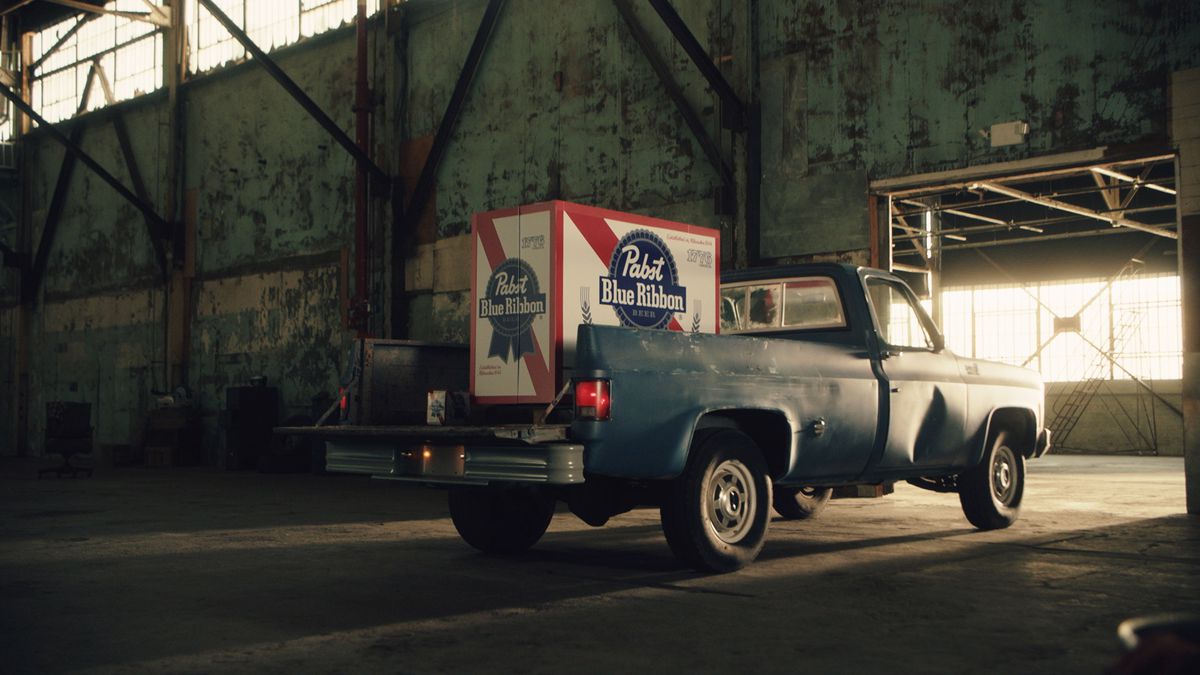
PBR Created a 1776-Can Pack of Beer | Food & Wine - Food & Wine

sela.indah.link PBR Created a 1,776-Can Pack of Beer | Food & Wine Skip to content ...

Popular Posts