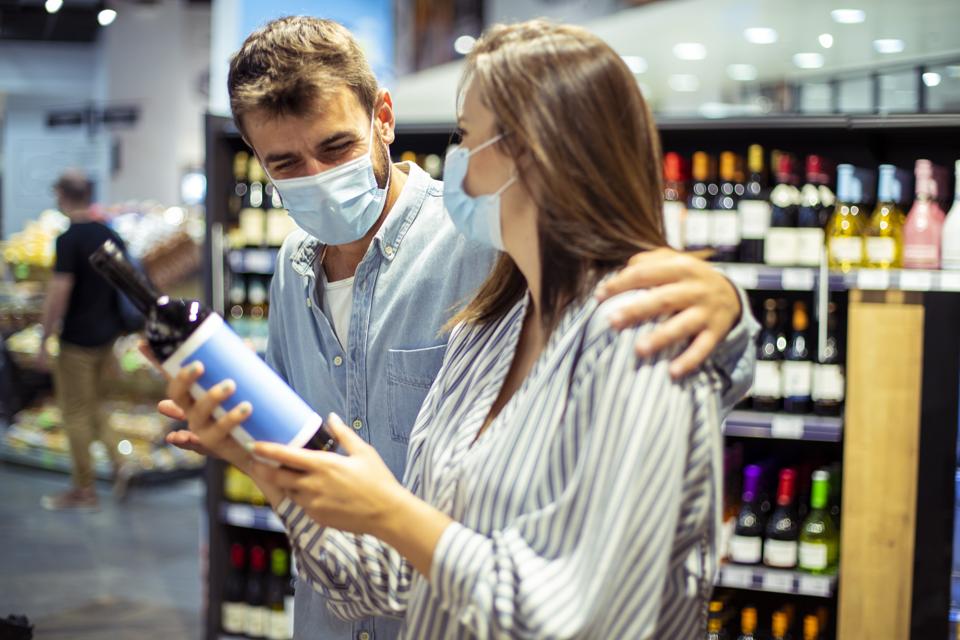
A couple who is grocery shopping has fulfilled the requirement of wearing masks in a supermarket ... [+]
gettyThe last six months of self-imposed quarantine have tipped the wine market on its edge. The retail sector has benefited enormously while restaurants, bars and hotels are suffering. With potentially months to go before the world, and its markets, normalize we take a look at what 2020 was like for the wine world and what lies ahead.
I had an exclusive interview with Rob McMillan, the executive vice president and founder of the Silicon Valley Bank Wine Division, which is preview to his comprehensive State of the Wine Industry Report due out in mid January. My questions are based on his preliminary findings. All responses have been edited and condensed for clarity.
Liza B. Zimmerman: What is your take wine sales for this year?
Rob McMillan (RM): Will have to wait on this one
L.B.Z.: Why do people think demand for wine and capital are up?
R.M.: They don’t necessarily think it’s up. They believe that demand is a positive influence on their winery. With capital, I suspect that they are saying the low interest rate environment and availability of debt is favorable.
Wine sales during Covid.
gettyL.B.Z.: What are some of the new practices wineries are taking on?
R.M.: Internet sales show as the most important channel for wineries. Telephone sales are gaining importance and of course Zoom sales as well.
L.B.Z.: What has been working best for many of them?
Internet sales, without a doubt.
L.B.Z.: How has tasting room visitation been going during the pandemic?
R.M.: It’s regional—of course—and with shelter in place, it’s all down compared to last year. For the North Coast it’s been frustrating to be closed entirely and then work back to reopening at reduced capacities but largely outside – only to have the fires make outdoor tasting unpalatable because of unhealthy air quality. However, attendance is picking up with better air.
Whether that is because the tasters are more serious, or recognize how difficult business conditions are, or just because they are eating more at home isn’t yet clear.
L.B.Z.: Are most wineries open again?
R.M.: Yes, but at reduced capacities depending on the county they are in.
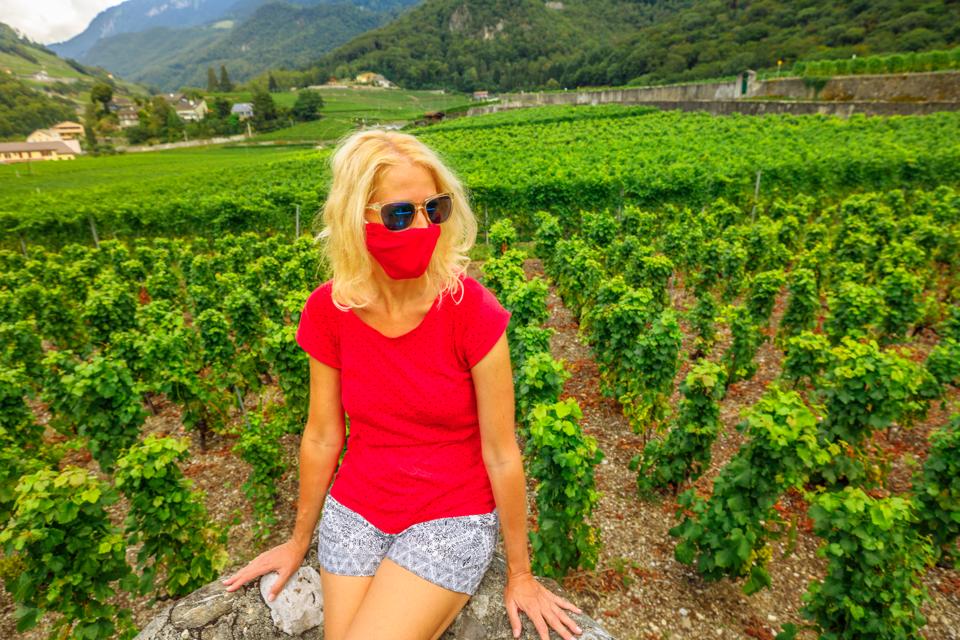
Visiting wineries in Covid.
gettyL.B.Z.: Are there regions that are doing better with online sales and why?
R.M.: Napa and Sonoma are showing higher sales volumes, albeit with slightly lower average bottle prices versus last year. That is more a function of their established presence on the wine market.
L.B.Z.: Are there size formats or varietals that are most popular?
R.M.: 750-ml—or standard—wine bottle is always the most popular. There has been an increase in value formats like Bag in a Box, but 375ml bottles (half bottles) and magnums have also seen growth during the pandemic.
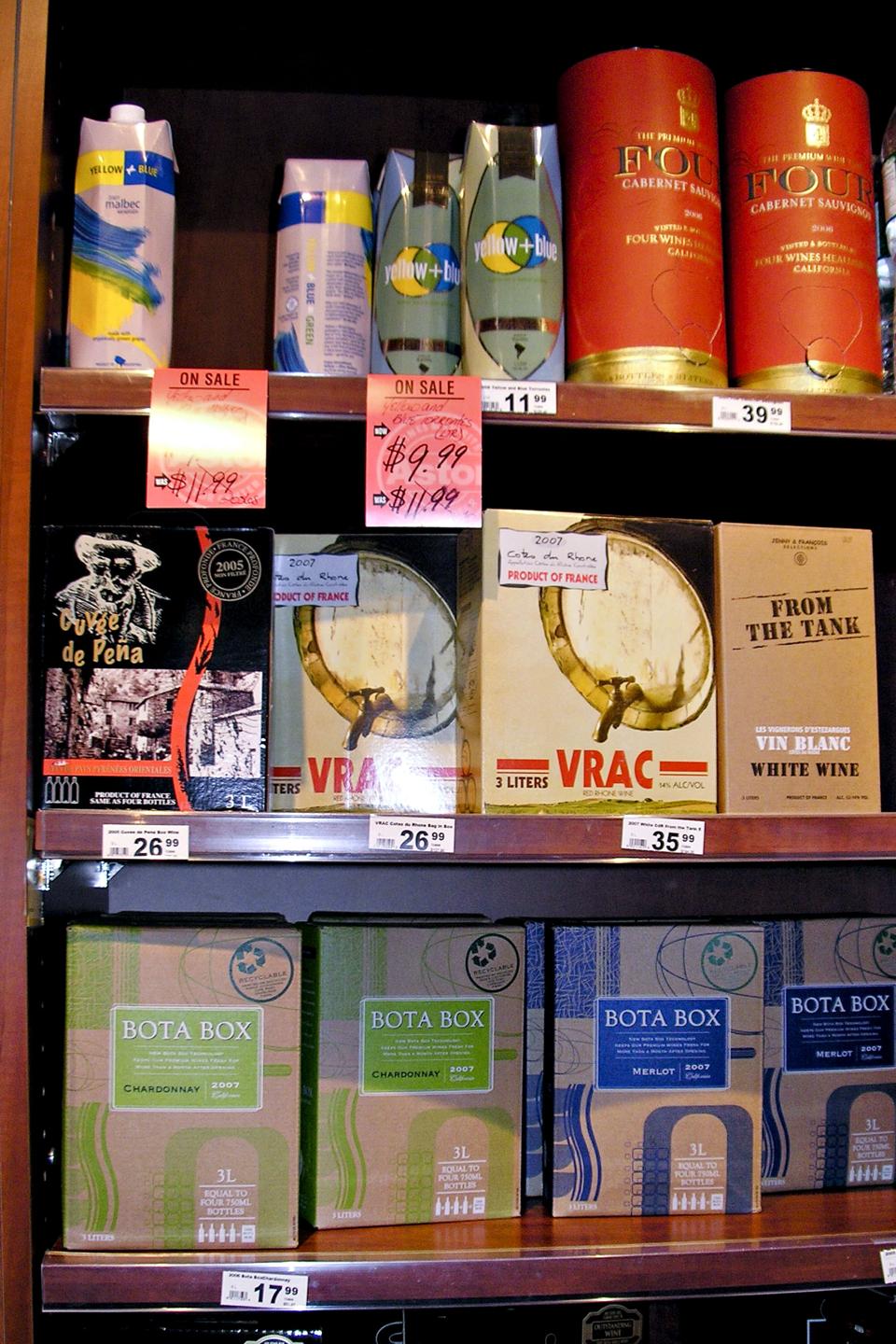
Bag in box wines on the shelf. Photographer: Elin McCoy/Bloomberg News
BLOOMBERG NEWSL.B.Z.: Were yields smaller than usual because of the fires?
R.M.: The belief is that this vintage was already smaller than in previous years. The fires will obviously impact it because the way tons are counted is through the Grape Crush Report. Tons are weighed on the crush pad. This year there will be grapes that are rejected and not reported, but there will be grapes that will be counted, vinified and found to have smoke taint and they may never see the inside of a bottle.
L.B.Z.: Do you still think that Gen X is going to be the dominate wine consumer as of next year?
R.M.: It’s going to be close. It’s neck and neck with Boomers in the interim survey data at this point.
L.B.Z.: What other trends are you seeing this year?
R.M.: Wineries that had good customer lists and adaptive management are the ones who have made the fastest changes to recover sales. Roughly one third of wineries are reporting higher to year-over-year sales while two thirds of them are reporting lower ones.
L.B.Z.: How will next year be different economically for wineries?
R.M.: This will come down to the virus and how well we move out a vaccine and get back to normalized business. There is no consensus on how quickly that might happen, but the CDC expects that we will be dealing with masks and distancing still in some form probably through winter 2021. Bottom line, the change of the calendar isn’t going to change the business conditions.
Wineries that have adapted the best will retain those skills, and to the extent a reopening takes place, will expect to have quite positive years.
Wineries that lost the 2020 vintage will be stretching the 2018 and 2019 vintages to remain in the market through 2021 and 2022.
L.B.Z.: Will the retail sector continue to take the lead?
R.M: Because we had such strong abnormal channel growth in the off-premise channel this year, as we reopen it is likely we will see year-over-year declines in those same stores as restaurants reopen and internet sales evolve to become more important to retail success and the consumer. That said, we are going to lose 25 percent or more of our restaurants in America as they won’t reopen. That will slow down that sales channel.
L.B.Z.: Will wine, and alcoholic beverage, purchases continue to increase?
R.M.: Consumer demand should still remain relatively flat for wine, beer should continue to decline and spirits will gain share from both.
L.B.Z.: Which presidential candidate will create better conditions for producers and those who love their wines?
R.M.: Alcohol sales seem to be low priority for both candidates. While they are important to those of us in the alcohol beverage industry, the President will have many things that have to be worked on before getting to thinking about supporting the wine and alcohol beverage industry.
October 27, 2020 at 04:55AM
https://ift.tt/3mqFrv8
Wine Trends During Covid - Forbes
https://ift.tt/31lUVcw
Wine



No comments:
Post a Comment