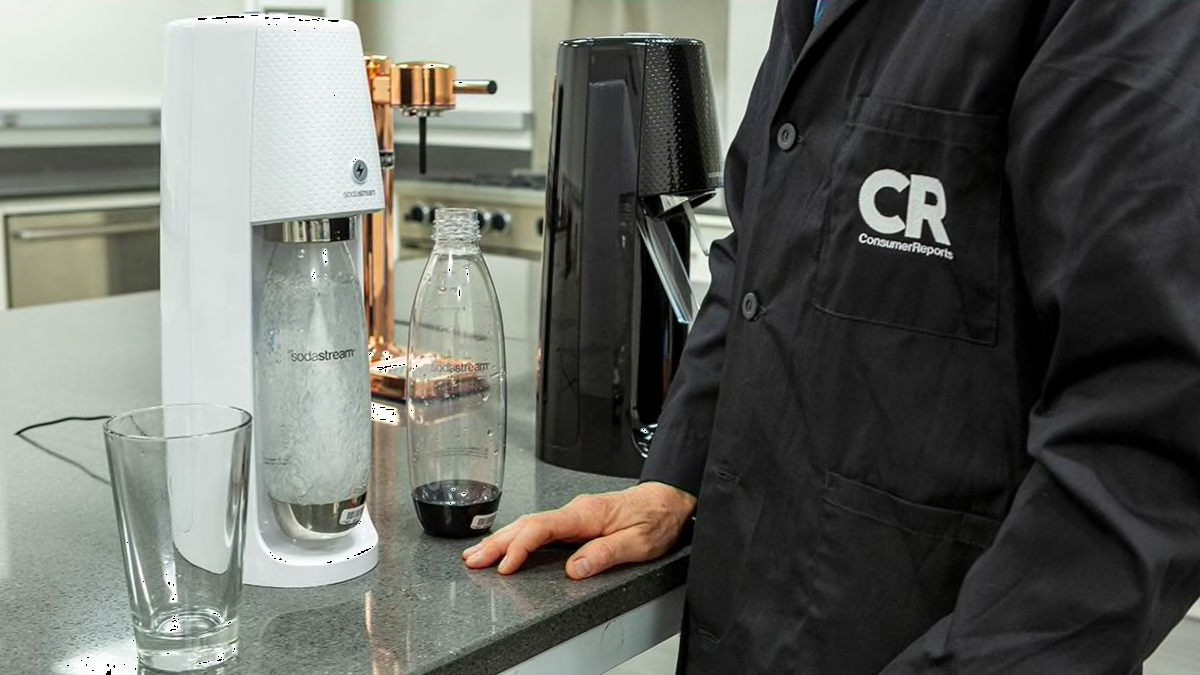
We made dozens of bottles of seltzer to evaluate the four soda makers in our tests. We rate each model on how easy it is to use, including when attaching and detaching bottles and using the controls. We use standard 14-ounce CO2 cylinders, which work in any soda maker.
To judge whether a soda maker produces equally fizzy bottles of seltzer, we start by using ice-cold water, which carbonates better, and we install a gauge on the cap to measure the gas pressure inside each bottle. “You can expect that bottles with the same internal gas pressure will produce about the same amount of fizz,” says Bernie Deitrick, the CR senior program leader who tested the soda makers. We also check the maximum gas pressure that each machine can add to water, for people who want a real snootful of scintillation.
In the bottle-cap test, we see how easy it is to release pressure from each brand’s gassed-up bottle without spilling soda everywhere. “When a bottle that’s been highly carbonated sits for a while—or has warmed up or been shaken—some of the gas that’s been pumped into the water enters the space at top of the bottle, so the gas pressure inside rises,” Deitrick says. “If the pressure isn’t released smoothly, the soda can come out fast, and you get a fizzy mess.”
For the icing test, we examine whether the CO2 nozzle ices up—a problem with some designs that can affect the fizz level. When high-pressure CO2 exits the injector, it drops in temperature and can freeze some water on the nozzle. When the injector is blocked, gas can be diverted to the bottle’s side—instead of directly down into the water—so it doesn’t carbonate as well.
So how did the soda makers in our tests do? Read on for ratings and reviews of each one.
November 14, 2020 at 05:40AM
https://ift.tt/36BDAgO
Best Soda Makers From Consumer Reports' Tests - ConsumerReports.org
https://ift.tt/2BNgZlB
Soda

No comments:
Post a Comment